
Unit 9 - The Proposal Questions Answers for Class 10 English
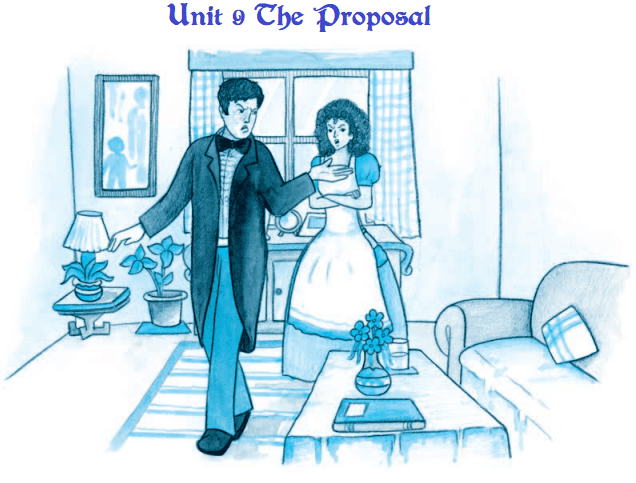
Ultimate NCERT Solutions for Unit 9 The Proposal
Updated Solution 2024-2025 Updated Solution 2024-2025
NCERT Solutions for Class 10 English, Unit 9 The Proposal Questions Answers
(Grammar & Comprehension)
(Unit 9 The Proposal Questions Answers)
Let’s Begin
Q 1. Facial expressions are non-verbal communications. These expressions play an important role in a play. They are powerful communication tools. The human face is extremely expressive. It is able to convey countless emotions without saying a word.
Expressions tell us the mood of the characters in the play. Some facial expressions are given below. The facial expressions are for happiness, sadness, anger, surprise, fear, and disgust.
Look at the facial expressions and write which emotion do they express.
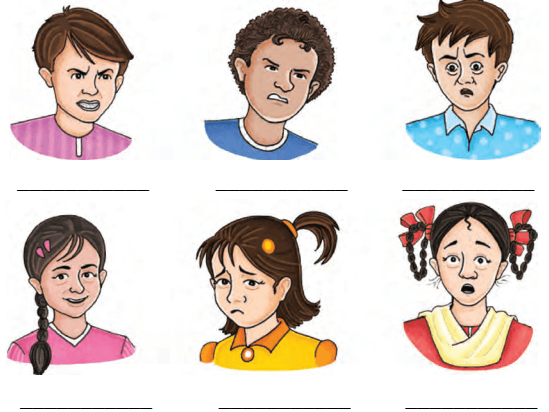
Ans 1: the interpretation of each facial expression from left to right, top to bottom:
Top Row:
- Anger – The child has clenched teeth and furrowed eyebrows.
- Disgust – The nose is wrinkled, and the mouth is slightly twisted.
- Confusion or Worry – The eyebrows are raised and drawn together, and the mouth is slightly open.
Bottom Row:
- Happiness – The child is smiling.
- Sadness – The corners of the mouth are turned down, and the eyes look heavy.
- Fear or Surprise – The mouth is open wide, eyes wide, and eyebrows raised.
Q 2. You have read ‘The Proposal’, a one act play. It is a farce. The play is set in only one location, the drawing room of Chubukov’s house.
All three characters in the play are quarrelsome people and they quarrel over petty issues. Lomov and Natalya start with the issue like a piece of land that is situated at the border between the two neighbors’ properties. The discussion turns into a quarrel and the marriage proposal is forgotten.
They shout at each other. They are again dragged into an argument over the superiority of each other’s dogs. So, they drag their ancestors in their foolish quarrel. They again abuse each other and call names.
Now, make groups of four and discuss the following points. While conducting the discussion, try to use the facial expressions given above.
- The marriage proposal is a mockery of romance and marriage in the upper class.
- The pride in property, even the superiority of dogs, take priority over love and marriage.
- The characters lack patience, stop listening to each other, and then contradict each other.
- Do you think these quarrels will promise a happy life?
- What qualities would you consider for a well-matched couple?
- Do you think all of us should know how to manage our anger?
Ans 2: Here’s how you and your group can structure the discussion using expressive facial gestures (based on the emotions shown earlier) to make it more dramatic and aligned with the tone of The Proposal.
Below is a sample group discussion you can use or build upon:
Group Discussion on “The Proposal” by Anton Chekhov
Student 1 (angry expression 😠):
This marriage proposal is a complete mockery of romance! Instead of expressing love, Lomov and Natalya spend their time yelling at each other. How can anyone take that seriously?
Student 2 (disgusted expression 😒):
Exactly! They argue over a piece of land and whose dog is better! It’s silly and shows that for the upper class, pride in property and status comes before any true emotion like love or understanding.
Student 3 (surprised expression 😲):
Can you believe they even start shouting about their ancestors? It’s shocking how quickly the proposal turns into a battlefield!
Student 4 (sad or thoughtful expression 😔):
Honestly, they don’t even listen to each other. They just interrupt and contradict everything the other says. There’s no patience, no respect.
Student 1 (questioning, frustrated expression 🤨):
With that kind of attitude, do you think they’ll have a happy married life? I doubt it. Their constant quarrels will probably continue forever.
Student 2 (calm, happy expression 😊):
A well-matched couple should have mutual respect, understanding, patience, and good communication. That’s what matters most, not land or dogs!
Student 3 (serious expression 😐):
We all need to learn how to manage our anger. If you lose your temper too quickly, it can ruin relationships—just like it nearly did for Lomov and Natalya.
Student 4 (firm expression 😤):
Yes! Imagine if they had simply spoken kindly and listened to each other—things would’ve gone so differently. Managing emotions is key in any relationship.
Reading Comprehension
Text I
How Can We Control Anger?
Do you get angry when your mother switches off the television? Do you get upset when you lose a game? Do you crib when your teacher does not pay attention to you? Most of us can have “yes” as an answer to one or more of these situations. Anger sometimes gets the better of us and leaves us to regret the consequences later. The question is ‘How can we control anger?’
Anger is a normal and healthy emotion—only if we know how to respond to it. Uncontrolled anger can often harm us directly or indirectly, whether we realise it or not.
Before we learn to address the issue, let us revisit the concept of anger. Anger is nothing but the absence of peace—with oneself, with people, or with situations around us.
We express it either by being assertive or aggressive.
Let us all become the managers of our own anger.
When angry, take a few moments to calm down—take five deep breaths, count up to ten, drink water, or change your place—before responding.
More often than not, we do not have control over the situations that distress us.
Getting physically active reduces stress. Funny dances, clapping, thumping your feet, going for a walk, or making funny faces at the mirror can help release anger or frustration.
Once we have our feelings under control, go through all the aspects of the situation and try to see the same situation from different perspectives.
If it is a problem, try to equip yourself with a few solutions before entering the same situation.
Avoid holding a grudge with people and learn when to seek help from others.
Realising your own shortcomings can become one of the greatest strengths of character over the years to come.
We can never control circumstances, people or situations as they are constantly changing. The only thing we can control is our response. So, we have to increase our capacity to tolerate, ability to understand, and learn to nurture love for others.
Q.1. What do you understand by the word ‘anger’?
_____________________________________________________
_____________________________________________________
Ans 1: Anger is the absence of peace with oneself, with people, or with situations around us. It is a normal and healthy emotion when handled properly, but uncontrolled anger can harm us.
Q.2. List any four strategies to manage anger.
_____________________________________________________
_____________________________________________________
Ans 2:
- Take deep breaths or count up to ten before responding.
- Drink water or change your place to calm down.
- Do funny dances, clapping, or make faces at the mirror to release frustration.
- Try to see the situation from different perspectives and prepare possible solutions.
Q.3. How can you develop strengths of character as given in the passage above?
_____________________________________________________
_____________________________________________________
Ans 3: We can develop strength of character by Realising our own shortcomings, learning to let go of grudges, seeking help when needed, and increasing our tolerance and understanding towards others.
Q.4. Anger management helps you in (Tick the correct answer.)—
(a) remaining always happy
(b) developing strength of character
(c) remaining stress free
(d) learning how to respond to the situation
Ans 4: (d) learning how to respond to the situation
Q.5. What is under our control? How can we make it a positive one?
_____________________________________________________
_____________________________________________________
Ans 5: Our response is under our control. We can make it positive by increasing our capacity to tolerate, trying to understand others, and nurturing love and empathy in our hearts.
TEXT II
“On Violence“
There is a great deal of violence in the world. There is physical violence and also inward violence.
Physical violence is to kill another, to hurt other people consciously, deliberately or without thought, to say cruel things, full of antagonism and hate.
And inwardly, inside the skin, to dislike people, to hate people, to criticise people. Inwardly, we are always quarrelling, battling—not only with others, but with ourselves.
We want people to change, we want to force them to our way of thinking.
In the world, as we grow up, we see a great deal of violence, at all levels of human existence. The ultimate violence is war—the killing for ideas, for so-called religious principles, for nationalities, the killing to preserve a little piece of land. To do that, man will kill, destroy, maim, and also be killed himself. There is enormous violence in the world, the rich wanting to keep people poor, and the poor wanting to get rich and, in the process, hating the rich. And you, being caught in society, are also going to contribute to this.
There is violence between husband, wife, and children. There is violence, antagonism, hate, cruelty, ugly criticism, anger—all this is inherent in man, inherent in each human being. It is inherent in you. And education is supposed to help you to go beyond all that, not merely to pass an examination and get a job. You have to be educated so that you become a really beautiful, healthy, sane, rational human being, not a brutal man with a very clever brain who can argue and defend his brutality.
You are going to face all this violence as you grow up. You will forget all that you have heard here, and will be caught in the stream of society. You will become like the rest of the cruel, hard, bitter, angry, violent world, and you will not help to bring about a new society, a new world.
But a new world is necessary. A new culture is necessary. The old culture is dead, buried, burnt, exploded, and vaporized.
You have to create a new culture. A new culture cannot be based on violence. The new culture depends on you because the older generation has built a society based on violence, based on aggressiveness and it is this that has caused all the confusion, all the misery.
The older generations have produced this world and you have to change it.
You cannot just sit back and say, “I will follow the rest of the people and seek success and position.” If you do, your children are going to suffer. You may have a good time, but your children are going to pay for it. So, you have to take all that into account, the outward cruelty of man to man in the name of God, in the name of religion, in the name of self-importance, in the name of the security of the family. You will have to consider the outward cruelty and violence, and the inward violence which you do not yet know.
(Source: ‘On Violence’, On Education by J. Krishna murti)
Q.1. What is the physical violence that J. Krishnamurti is talking about?
Ans 1: Physical violence refers to hurting or killing others intentionally or unintentionally. It includes actions like murder, physical harm, and using cruel or hateful language towards others.
Q.2. What is the violence that cannot be expressed?
Ans 2: The violence that cannot be expressed is inward violence, such as hatred, criticism, internal conflicts, jealousy, and the desire to force others to think like us.
Q.3. War, the ultimate violence, could be due to (Tick the correct options)—
(a) difference of ideas
(b) religious principles
(c) nationalities
(d) the feeling to protect a little piece of land
(e) all of the above
(f) none of the above
Ans 3: (e) all of the above
Q.4. How has J. Krishnamurti given the feelings of the rich and the poor in the given paragraph?
Ans 4: He says the rich want to keep the poor in poverty, while the poor want to become rich and, in the process, start hating the rich. This mutual hatred adds to the overall violence in society.
Q.5. What is the role of education in a human being’s life?
Ans 5: Education should help us go beyond violence and become rational, healthy, and kind human beings—not just people who pass exams and get jobs. It should build character and awareness.
Q.6. How, as a student, will you create a new world?
Ans 6: As a student, I will work on controlling my anger, avoid hatred, learn to understand others, and promote peace and kindness. I will not follow the violent ways of society and instead help build a new, non-violent culture.
Vocabulary
Q 1. Some verbs are given below. Write their nouns and adverb forms in the space provided:
| VERB | NOUN | ADVERB |
| encourage | ||
| excite | ||
| trouble | ||
| beautify | ||
| tremble |
Ans 1: Here’s the table with the noun and adverb forms of the given verbs:
| VERB | NOUN | ADVERB |
| encourage | encouragement | encouragingly |
| excite | excitement | excitedly |
| trouble | trouble | troublingly* / troublingly* (rare) |
| beautify | beauty | beautifully |
| tremble | trembling / tremble | tremblingly |
*Note: The adverb form of “trouble” is not commonly used, but “troublingly” can be used in rare cases. “With trouble” is a more natural expression in English.
Grammar
Reported speech
Q 1. Some children are taken to a health clinic for a regular checkup. Rewrite the sentences they speak in reported speech. (Use complain, say, tell, ask, inquire, mention, etc., wherever necessary.)
Ashish: I feel sleepy all the time.
Neha: I get pain in my legs when I run.
Sonal: I’m fine.
Ritu: I had fever last week.
Akash: Why do I always cough ?
Rehman: Should 1 walk every day to keep myself fit ?
Sumi: Oh, thank you, Doctor. Now I know the reason for my constant stomach ache.
- Though ‘tell’ and ‘say’ almost mean the same, there are differences in the usage of the two words. ‘Tell’ is always followed by an indirect object but ‘say’ is not.
Example:
I told my sister that she was right.
Ashish said he worked hard to achieve success.
We can use ‘ask’ with or without an indirect object.
Example:
My mother asked (me) if I was ready for the party. Madhu asked (the tailor) whether her dresses were ready
Ans 1: Rewrite the sentences in reported speech, using appropriate reporting verbs like say, tell, complain, ask, inquire, and mention:
· Ashish said that he felt sleepy all the time. · Neha complained that she got pain in her legs when she ran. · Sonal said that she was fine. · Ritu mentioned that she had had fever the previous week. · Akash asked why he always coughed. · Rehman inquired if he should walk every day to keep himself fit. · Sumi thanked the doctor and said that now she knew the reason for her constant stomach ache. |
Q 2. Use ‘said’, ‘told’ or ‘asked’ to fill in the blanks in the following sentences. One has been done for you.
Shilpi : Father, I want to go on a trip to Uttarkashi.
Shilpi told her father that she wanted to go on a trip to Uttarkashi.
Archana : It is very hot in Jaisalmer. Archana said that it was very hot in Jaisalmer.
(a) The Scientist ______________that dinosaurs lived 230 million years ago.
(b) The teacher _____________the students that she was going to conduct a new experiment.
(c) Could you please ___________me where the new bookshop is located?
(d) The student_____________(the teacher) if it was possible is located?
(e) It is requested that he should ___________the truth.
(f) Father____________(his son) whether he had paid his fees or not.
Ans 2: Here are the sentences with the correct use of said, told, or asked filled in:
(a) The Scientist said that dinosaurs lived 230 million years ago.
(b) The teacher told the students that she was going to conduct a new experiment.
(c) Could you please tell me where the new bookshop is located?
(d) The student asked the teacher if it was possible.
(e) It is requested that he should tell the truth.
(f) Father asked his son whether he had paid his fees or not.
Editing
Jumbled Sentences
Q 1. Join the parts of the sentences given below and write meaningful sentences.
(a) by giving ultimate/individual can transform everything/expression to /the inner determination of an/the infinite potential of human being ______________________________________________________
______________________________________________________
Ans a): An individual can transform everything by giving ultimate expression to the inner determination of the infinite potential of a human being.
(b) down many a time/but keep rising/that you may go/the Sun teaches us
______________________________________________________
______________________________________________________
Ans b): The Sun teaches us that you may go down many a time but keep rising.
(c) but how much love/much we give/we put into giving/it’s not how
______________________________________________________
______________________________________________________
Ans c): It’s not how much we give, but how much love we put into giving.
(d) fit for human habitation/would mould the world/the citizens of tomorrow/into a globe ______________________________________________________
______________________________________________________
Ans d): The citizens of tomorrow would mould the world into a globe fit for human habitation.
(e) you must hear/to be a great leader /and pains of people/the unspoken joys
______________________________________________________
______________________________________________________
Ans e): To be a great leader, you must hear the unspoken joys and pains of people.
Unit 9 The Proposal Questions Answers (Grammar & Comprehension)
Updated Solution 2024-2025
Listening
Q 1. You have read a play by Anton Chekov. Given below is a story by the same author. Listen and enjoy the recorded story or someone may read it aloud to you. Then answer the questions that follow.
“Vanka“
(Vanka Zhukov, a nine-year old boy, was made an assistant to Alyakhin, the Shoemaker. He didn’t go to bed on Christmas Eve. When everyone in the shop had gone to Church, he began to write on a crumpled sheet of paper. “Dear Grandfather Konstantin, he wrote”, I’m writing a letter to you. I wish you a Merry Christmas and all good things from the Lord God. I’ve no father and mother, and you are all I have left.”)
Vanka raised his eyes to the dark windowpane. In his imagination he saw his grandfather Konstantin standing there. His grandfather was a night watchman on the estate of a rich man. Konstantin was a small, thin and lively old man of sixty-five whose face was always crinkling with laughter.
In the daytime the old man slept in the servant’s kitchen or cracked jokes with the cooks. At night, wrapped in a big sheepskin coat he made rounds of the estate, blowing his whistle at regular intervals.
He was always followed by his dogs, Brownie and Eel. Eel was a particularly remarkable dog. He was extremely respectful and endearing and looked lovingly on friends and strangers alike; yet no one trusted him.
He would creep behind someone and bite his leg or run off with a peasant’s chicken. Many a time Eel was beaten mercilessly, yet he always managed to survive.
At this very moment, Vanka thought, grandfather was probably standing by the gates, looking up at the bright red windows of the village church and cracking jokes with the servants.
“What about a pinch of snuff?” he would say, holding out his snuffbox to the women.
The women would take a pinch and sneeze and the old man would feel happy about it. “Fine for frozen noses, eh!” he’d say.
The dogs, too, were given snuff. Brownie would sneeze, shake her head and walk away looking hurt. Eel, too polite to sneeze, only wagged his tail.
Vanka looked through the window. The weather was glorious. The air was fresh. The night was very dark, but the roofs of the houses and trees were all covered with snow. Stars twinkled in the sky and it appeared that they had been washed and placed there only for the holidays.
Vanka sighed, and went on writing:
“Yesterday I was given a beating. That was because when I was rocking the baby in the cradle, I unfortunately fell asleep.
Another day the mistress of the house asked me to clean the fish. I didn’t know how, so she rubbed the fish all over my face. My friends laughed at me.
Then there’s nothing to eat. In the morning, they give me bread, there is porridge for dinner and in the evening only bread again. The master and the mistress eat all the good things themselves.
I sleep in the corridor and when the baby cries, I don’t get any sleep at all because I’ve to rock the cradle.
Dear Grandfather, please take me away from here, take me to the village, it’s more than I can bear.” Vanka rubbed his eyes with his fists and sobbed.
“I’ll grind your snuff for you, he went on”, I’ll pray to God to keep you healthy and if I ever do anything wrong, you can beat me as you like. If you think there’s no place for me then I can clean boots or even work as a shepherd boy. Grandfather, it’s more than I can bear. I thought of running away to the village, but I don’t have any boots. If you’ll help me now, I’ll feed you when I grow up and when you die, I’ll pray for your soul just like I do for my mother.
“Dear Grandfather, when they put up the Christmas tree at the big house, please take down a golden walnut for me and hide it in the green box. Ask the young mistress Olga, and say it is for Vanka.”
Vanka sighed and gazed in the direction of the window. He remembered it was grandfather who always went to the forest to cut down a Christmas tree for the rich people, taking Vanka with him. They had a wonderful time together, the snow falling, the trees crackling and hares springing across the trees,
When the tree had been chopped down, grandfather would drag it to the big house and they would start decorating it. The young mistress Olga, Vanka’s favourite, was the busiest of all. Vanka’s mother, when alive, had worked as Olga’s maid. Then Olga had given him all the sweets and played a lot with Vanka. But after his mother’s death, Vanka was sent to the kitchen to be with his grandfather and from there to Alyakhin, the shoemaker.
“Come to me, dear grandfather,” Vanka wrote on, “Please, take me away from here, have pity on me, a poor orphan. They are always beating me. I’m terribly hungry and so miserable that I’m always crying. Remember me to all my friends. I remain your grandson, Ivan Zhukov. Dear grandfather, please come soon.”
Vanka folded the sheet of paper and then put it in an envelope he had bought the previous day. He thought for a while, then wrote the address: To Grandfather in the Village. He added the words: Konstantin Makarich.
He was happy that no one had disturbed him while he was writing his letter. He ran out to the street to post it.
Vanka had been told by the clerks that letters were dropped in boxes from where they were carried all over the world on mail coaches drawn by horses and driven by drunken drivers, while the bells jingled.
Vanka ran to the nearest mailbox and put his letter in it.
An hour later, lulled by sweetest hopes, he was fast asleep. He dreamed of a stove. His grandfather was sitting beside it, reading out his letter to the cooks. Eel, the dog, was walking round the stove, wagging his tail.
–Anton Chekov
(a) Vanka went to bed early on Christmas Eve as.
______________________________________________________
______________________________________________________
Ans a): everyone in the shop had gone to church, and he wanted to write a letter to his grandfather without being disturbed.
(b) Why, of all people, did he write a letter to his grandfather?
______________________________________________________
______________________________________________________
Ans b): Because his grandfather was the only family he had left, and Vanka hoped he would take him away from his miserable life.
(c) How was his grandfather a very lovable person?
______________________________________________________
______________________________________________________
Ans c): His grandfather was lively, kind, funny, and loved joking with the cooks. He was also affectionate toward his dogs and shared his snuffbox with others, making people laugh.
(d) Vanka was beaten _______________________________times.
Ans d): Vanka was beaten many times.
(e) Vanka was beaten because____________________________.
Ans e): he fell asleep while rocking the baby in the cradle and because he didn’t know how to clean the fish.
(f) What was Vanka prepared to do for grandfather if he was taken away from the shoemaker? ______________________________________________________
______________________________________________________
Ans f): He said he would grind snuff for him, pray for him, work as a shepherd boy, or clean boots. He also promised to feed him when he grew up and pray for his soul after his death.
(g) He was sent to Alyakhin, the shoe-maker, to
______________________________________________________
______________________________________________________
Ans g): work as an assistant after his mother died.
(h) Who does Vanka remember most at Christmas, next to his grandfather?
______________________________________________________
______________________________________________________
Ans h): The young mistress Olga, who used to play with him and give him sweets.
(i) How did he address the letter?
______________________________________________________
______________________________________________________
Ans i): “To Grandfather in the Village” and wrote the name “Konstantin Makarich”.
(j) Did he sleep well after posting the letter? What did he dream?
______________________________________________________
______________________________________________________
Ans j): Yes, he slept well. He dreamt of a warm stove, with his grandfather reading his letter to the cooks and the dog Eel wagging his tail nearby.
Speaking
Q 1. Enact the play in the class. Keep in mind— dialogue delivery—tone, voice modulation; non-verbal communications— facial expressions, gestures, movements, etc. Many things are communicated through these non-verbal tools.
Q2. A communicative task is given below. Practice in pairs or groups.
Task I
(Discussing, giving opinions, agreeing, and disagreeing)
Role Play
Smita: Well! What do you think about violence on television?
Romila: If you ask me, there is too much violence on television. Children should not be exposed to it.
Smita: I don’t agree with you. Why do you say so ?
Romila: It’s not wise to expose children to a lot of fighting, shooting, stabbing, and killing.
Smita: But children find it thrilling.
Romila: No, they don’t. On the contrary it brutalises them and makes them insensitive. They look upon violence and killing as common place incidents.
Smita: But the young people now a days are Question quite violent.
Romila: Precisely. It is the influence of television. Wouldn’t it be better if through television we give them the message of peace and togetherness.
Pair or Group Work
Discuss with your friends the following topics—people going abroad for studies, building a dispensary in place of a playground, sports cannot be a profession, or any topic that is of interest to you and your friends
Ans 1: Enacting the Play in Class
Tips for a good performance:
1. Dialogue Delivery:
- Speak clearly and confidently.
- Stress important words to show emotions.
- Change your tone based on the character’s feelings (happy, angry, sad, etc.).
2. Voice Modulation:
- Raise or lower your voice as needed.
- Speak slowly when emotional, faster when excited.
- Use pauses to build dramatic effect.
3. Non-Verbal Communication:
- Facial Expressions: Use your face to show anger, sadness, joy, or confusion.
- Gestures: Use your hands and body to match the dialogue.
- Movements: Walk, sit, or move naturally as your character would.
4. Teamwork:
- Rehearse with your group.
- Listen to others and respond naturally.
- Support one another if someone forgets a line.
Ans 2: Role Play Activity (Sample Response)
Here’s how you and a partner or group could do it for a new topic:
Sample Role Play Discussion:
Topic: People going abroad for studies
Ananya: I think going abroad for studies is a great opportunity. You get exposure to international education and new cultures.
Priya: That’s true, but it’s also very expensive and not everyone can afford it.
Ananya: Yes, but scholarships and student loans are available. And the quality of education is often better.
Priya: Still, many students never come back. That leads to brain drain in our country.
Ananya: That’s a valid point. Maybe we need better opportunities here too, so people feel like returning.
Priya: Exactly. It should be a personal choice, but we must also think of our country’s future.
Other Topics You Can Discuss in Class:
1. Building a dispensary in place of a playground
- Health vs. recreation: Which is more important?
2. Sports cannot be a profession
- Debate on sports as a career vs. academic careers.
3. Should mobile phones be banned in schools?
4. Online learning vs. classroom learning
5. Is homework necessary?
Writing
Q 1. Letters in the olden times were carried by mail coaches driven by horses. How are they carried today? List the types of letters sent by different means of transport.
Ans 1: Today, letters and parcels are carried using modern and faster means of transport. Here’s a list of different types of letters and the means of transport used to carry them:
Types of Letters and Their Modern Means of Transport:
| Type of Letter | Means of Transport |
| Ordinary letters / Inland letters | By road (postal vans, mail trucks, bicycles) |
| Speed Post / Express Mail | By air (aircraft), road, and sometimes rail |
| Registered letters / Parcels | By road and rail (special mail trains or compartments) |
| International Letters | By air (airmail) and sometimes sea (cargo ships) |
| Courier Services (e.g., DTDC, Blue Dart) | Mostly by air and road |
| Electronic letters (E-mails) | Through the internet (not a physical transport) |
Examples of Transport Involved:
- Road: Postal vans, motorbikes, cycles (especially in rural areas)
- Rail: Railway mail service compartments in express/passenger trains
- Air: Cargo flights, commercial airlines
- Sea: Cargo ships for parcels and bulk mail to distant countries
Q2. You have listened to the story of Vanka. Try writing an e-mail to your grandfather describing your life. Have you ever felt as bad as Vanka did? What did you do to feel happy again?
Ans 2: Here’s an example of an email you might write to your grandfather, inspired by Vanka’s story but written in your own voice.
To: grandfather@example.com
Subject: Just wanted to talk to you, Dadu
Dear Dadu,
I hope you’re doing well and taking care of your health. I really miss you, and I thought of writing to you just to share how life is going on my side.
School has been a little tiring lately. Sometimes I feel overwhelmed with homework and projects, and there are days when I don’t feel like talking to anyone. I remember once when I had a bad day at school—my teacher scolded me, and I felt so low. I came home and just sat alone for a while.
But then I remembered your stories, your laughter, and how you always cheer me up. I called you, and just hearing your voice made me feel better. I also drew a little sketch that day, and that made me happy again. Drawing helps me feel calm and peaceful.
Unlike Vanka, I’m lucky to have a warm home, good food, and parents who care for me. But I do understand how lonely he must have felt. I hope I never have to feel that helpless.
When are you coming to visit us? Or can I come and stay with you for a few days in the summer? We can go for a walk in the evening like we used to, and maybe you can tell me that old story about your dog again.
Take care, Dadu. Write back soon!
Love,
[Harshit]
Q 3. a) You have read ‘A Letter to God’ in your textbook First Flight. Lencho wrote a letter to God expressing his desire. Did it reach God?
Ans a): Lencho’s letter didn’t reach God directly. However, the postmaster and other postal workers, touched by Lencho’s faith, decided to help. They collected money among themselves and sent it to Lencho pretending it was from God. So, in a way, Lencho’s faith was rewarded, but it was human kindness—not a divine hand—that fulfilled his request.
b) Do you think Vanka’s letter reached his grandfather? What is the correct way to address a letter?
Ans b): It is very unlikely that Vanka’s letter reached his grandfather. He didn’t write a complete or correct address—he simply wrote “To Grandfather in the Village” and “Konstantin Makarich.” Without a village name, postal code, or proper address, the postal service wouldn’t have known where to deliver it.
Correct way to address a letter:
Here is a proper format for addressing a letter:
Mr. Konstantin Makarich
House No. 25, Near Church
Smolensk Village
Moscow District
Russia – 123456
c) Suppose Vanka and Lencho meet. Create an interesting dialogue between the two. What encouraged them to write letters to God and grandfather?
Dialogue Lencho : Hello! Vanka.
Vanka : Hello! How are you?
Lencho : __________________________________________.
Vanka : __________________________________________.
Lencho : __________________________________________.
Vanka : __________________________________________.
Lencho : __________________________________________.
Vanka : __________________________________________.
Ans c): Here’s a creative and meaningful dialogue between Lencho and Vanka that explores their emotions and reasons for writing their letters:
Lencho: Hello! Vanka.
Vanka: Hello! How are you?
Lencho: I’m doing better now. I still remember the day I wrote that letter to God… I had lost all my crops in the hailstorm.
Vanka: Oh, that must have been heartbreaking. I wrote to my grandfather because I was so sad and lonely.
Lencho: Yes, I felt helpless too. But my faith in God gave me hope. I truly believed He would help me.
Vanka: I understand. I believed my grandfather would rescue me. He was the only person left who loved me.
Lencho: What encouraged you to write that letter?
Vanka: My memories of my grandfather… and the hope that he would hear me, even without the right address. What about you?
Lencho: My faith. When you believe with all your heart, sometimes even strangers become angels.
Vanka: I wish my letter had reached my grandfather. But still, writing it made me feel a little less alone.
Project
Q 1. Suppose you were asked to find a groom or a bride for a member of your family. What characteristics would you look for in them? Make a list.
|
|
You can also talk to them to know what they think their partner must possess.
Ans 1: Here’s a list of characteristics you might look for in a bride or groom for a family member, along with space for your own thoughts and conversations with that family member
Characteristics to Look for in a Bride or Groom:
- Good character – Honest, kind, respectful, and humble.
- Similar values and beliefs – Share cultural, moral, and family values.
- Education – Well-educated and willing to keep learning.
- Financial stability – Responsible and self-sufficient.
- Sense of responsibility – Committed to relationships and duties.
- Good communication skills – Can express thoughts and listen well.
- Compatibility – Matches in lifestyle, habits, and long-term goals.
- Healthy and fit – Physically and mentally healthy.
- Sense of humour – Able to laugh and handle life with positivity.
- Respect for elders and family – Values relationships and traditions.
Ask the Family Member:
You can ask them questions like:
- What kind of personality do you get along with best?
- Do you care more about education or sense of humour?
- Would you prefer someone who’s adventurous or calm and steady?
- Is religion or cultural background important to you?
- What are some deal breakers for you?
Unit 9 The Proposal Questions Answers (Grammar & Comprehension)
Updated Solution 2024-2025
This complete solution is prepared as per the latest syllabus of 2024-25. If you have any further queries, feel free to ask! 😊