Chapter-7-LifeLine of National Economy (GEOGRAPHY) for Class 10
Ultimate NCERT Solutions for Ch-7-LifeLine of National Economy
Updated Solution 2025-2026 Updated Solution 2025-2026
NCERT Solutions for Class 10 Geo, Ch-7-LifeLine of National Economy
(Exercises, Question/Answers & Activities)
Ch-7-LifeLine of National Economy
Q 1. Collect information of National Highway numbers (old and new) from the website morth.nic.in/national-highway-details. The historical Sher-Shah Suri Marg between Delhi and Amritsar is known by which National Highway?
Ans 1: The historical Sher-Shah Suri Marg between Delhi and Amritsar is known as (National Highway 44.) (New No (NH 44) And Old No is (NH 1)). This highway is one of the longest in India and plays a significant role in connecting several important cities along its route.
The details of National Highways (New No.) in the country and their length
Sr. No. | Name of State/UT | National Highway No. |
1 | Andhra Pradesh | 16, 216, 216A, 516C, 516D, 516 E, 716, 716A, 716B, 26, 326, 326A, 30, 40, 140, 340, 340C, 42, 44 N.S., 544D, 544F, 544DD, 544E, 150A, 65, 165, 365BB, 565, 765, 67, 167, 167A, 167B, 167BG, 69, 71, 75 |
2 | Arunachal Pradesh | 13, 113, 313, 513, 713, 713A, 15, 115, 215, 315, 415, 515, 315A |
3 | Assam | 2, 702, 702C, 702D, 6, 306, 8, 208A, 15, 115, 215, 315, 315A, 415, 515, 715, 715A, 17, 117, 117A, 217, 27 E.W., 127, 127A, 127B, 127C, 127D, 127E, 427, 627, 29, 129, 329, 329A, 37 |
4 | Bihar | 19 G.Q., 119, 219, 319, 319A, 20, 120, 22, 122, 122A, 122B, 322, 722, 922, 27 E.W., 227, 227A, 227F, 227J, 227L, 327, 327A, 327AD, 527, 527A, 527B, 527C, 527D, 527E, 727, 727A, 727AA, 31, 131, 131A, 131B, 231, 331, 431, 531, 33, 133, 133A, 133B, 333, 333A, 333B, 333C, 139 |
5 | Chandigarh | 5 |
6 | Chhattisgarh | 30, 130, 130A, 130B, 130C, 130D, 130CD, 930, 43, 143B, 343, 45, 49, 149B, 53, 153, 353, 63, 163, 163A |
7 | Delhi | 9, 709B, 44, 344M, 344N, 344P, 48, 148A, 148AE, 148NA, 248BB |
8 | Goa | 748, 748AA, 66, 366, 566 |
9 | Gujarat | NE-1, 27, 927D, 41, 141, 341, 47, 147, 147D, 48, 148M, 148N, 848, 848A, 848B, 51, 151, 151A, 251, 351, 351F, 751, 751D, 751DD, 53, 753B, 953, 754K, 56, 756, 58, 64, 68, 168, 168A |
10 | Haryana | NE2, 703, 5, 105, 7, 907, 907G, 9, 709, 709A, 709AD, 11, 919, 334B, 334D, 344N, 344P, 444A, 48, 148A, 148B, 148N, 148NA, 44, 344 248A, 248BB, 54, 52, 152, 152A, 152D, 352, 352A, 352R, 352W, 254 |
11 | Himachal Pradesh | 3, 103, 303, 503, 503A, 5, 105, 205, 305, 505, 505A, 705, 7, 707, 907A, 907, 154, 154A, 44 N.S. |
12 | Jammu & Kashmir | 1, 301, 501, 701, 701A, 3, 44, 144, 144A, 244, 244A, 444 |
13 | Jharkhand | 114A, 18, 118, 218, 19, 419, 20, 220, 320, 320D, 320G, 22, 522, 33, 133, 333, 133A, 133B, 333A, 39, 139, 43, 143, 143A, 143B, 143AG, 143D, 143H, 343, 49 |
14 | Karnataka | 44 N.S., 544DD, 544E, 48 G.Q., 548B, 548H, 648, 748, 748AA, 948, 948A, 50, 150, 150A, 52, 752K, 160, 161A, 561A, 163, 65, 66, 166E, 766, 766C, 766E, 766EE, 67, 167, 367, 367A, 69, 169, 169A, 369, 369E, 73, 173, 373, 75, 275, 275K, 181 |
15 | Kerala | 544, 744, 66, 766, 966, 966 A, 966 B, 183, 183A, 85, 185 |
16 | Madhya Pradesh | 719, 27, 927A, 30, 34, 135, 135B, 135BB, 135BD, 135BG, 135C, 44, 45, 934, 39, 339B, 539, 43, 543, 943, 46, 146, 146B, 346, 47, 147E, 347, 347A, 347B, 347C, 547, 548C, 52, 552 Ext., 752B, 752C, 752G, 753L, 56, 161G |
17 | Maharashtra | 930, 930D, 130D, 543, 44, 47, 547, 547E, 347C, 247, 647, 347A, 48, 348, 348A, 348B, 348BB, 548A, 548B, 548C, 548DD, 548H, 548D , 548, 548CC, 548E, 848, 848A, 50, 150, 52, 652, 752E, 752G, 752I, 752K, 752H, 53, 353C, 353D, 353E, 753, 753A, 753B, 753E, 753F, 953, 353B, 353I , 753J, 753L, 353J, 353K, 753C, 753BB, 753AB, 753H, 753M, 60, 160, 160A, 160B, 160C, 160D, 160H, 61, 161, 161A, 161E, 161G, 161H, 461B, 361F, 361, 361B, 361C, 361H, 561A , 561, 561, 761, 63, 65, 465, 965, 965DD, 965D, 965C, 965G, 66, 166, 166A, 166H, 166D, 166F, 166G, 166E, 266 |
Sr. No. | Name of State/UT | National Highway No. |
18 | Manipur | 2, 102, 102A, 102B, 102C, 202, 702A, 29, 129A, 37, 137, 137A |
19 | Meghalaya | 6, 106, 206, 217, 127B |
20 | Mizoram | 2, 102B, 302, 502, 502A, 6, 306, 306A, 108 |
21 | Nagaland | 2, 202, 702, 702A, 702B, 702D, 29, 129, 129A, 229, 329A |
22 | Odisha | 16 G.Q., 316, 316A, 516, 516A, 18, 20, 220, 320D, 520, 720, 26, 126, 126A, 326, 326A, 130C, 130CD, 143, 143H, 49, 149, 53, 153B, 353, 55, 655, 57, 157, 157A, 59, 63 |
23 | Puducherry | 32, 332 |
24 | Punjab | 3, 503, 503A, 703, 703A, 703B, 5, 105B, 205, 205A, 7, 9, 44, 344, 344A, 344B, 148B, 148BB, 52, 152, 152A, 54, 154, 154A, 254, 354, 354B, 354E, 754, 62 |
25 | Rajasthan | 709, 11, 311, 911, 911A, 919, 21, 921, 23, 123, 25, 125, 325, 925, 925A, 27, 927A, 44, 48, 148, 148B, 148C, 148D, 148N, 248, 248A, 448, 52, 552, 552G, 752, 54, 754K, 954, 56, 156, 58, 158, 458, 758, 62, 162, 162A, 68, 168, 168A, 968, 70 |
26 | Sikkim | 10, 310, 310A, 510, 710, 717A, 717B |
27 | Tamil Nadu | 16 G.Q., 716, 716A, 716B, 32, 32 Ext., 132, 132B, 332, 332A, 532, 36, 136, 136, 136B, 336, 536, 38, 138, 338, 40, 42, 44 N.S., 544, 544H, 744, 744A, 844, 944, 48 G.Q., 648, 948, 66, 75, 77, 79, 179A, 179B, 179D, 81, 181, 381, 381A, 381B, 83, 183, 383, 85, 785, 87 |
28 | Telangana | 30, 44, 150, 353B, 353C, 61, 161, 161B, 161AA, 161BB, 63, 163, 363, 563, 65, 365, 365A, 365B, 365BB, 565, 765, 765D, 167 |
29 | Tripura | 8, 108, 108A, 108 B, 208, 208A |
31 | Uttar Pradesh | NE2, 307, 9, 509, 709A, 709AD, 709B, 19, 219, 319D, 519, 719, 21, 321, 321G, 123, 24, 124C, 124D, 27, 227A, 727, 727A, 727AA, 727BB, 727B, 727G, 727H, 927, 28, 128, 128A, 128B, 128C, 328, 328A, 30, 230, 330, 330A, 330B, 330D, 530, 730C, 730S, 530B, 730B, 730H, 730, 730A, 31, 731, 731A, 731B, 731AG, 731K, 135, 335, 931, 931A, 34, 234, 334, 334A, 334C, 334B, 334D, 334DD, 534, 734, 35, 135C, 135A, 135BB, 135B, 39, 339, 539, 44, 344, 552 Ext. |
30 | Uttarakhand | 7, 107, 107A, 507, 307, 707, 707A, 9, 109, 309, 309A, 309B, 30, 34, 134, 334, 334A, 534, 734, 344 |
32 | West Bengal | 10, 110, 12, 112, 312, 512, 14, 114, 114A, 314, 16, 116, 116A, 116B, 316A, 17, 317, 317A, 517, 717, 717A, 18, 218, 19, 419, 27, 327, 327B, 327C, 31, 131A, 33, 133A, 49 |
33 | A & N Islands | 4 |
34 | Dadra & Nagar Haveli | 848A |
35 | Daman & Diu | 848B, 251 |
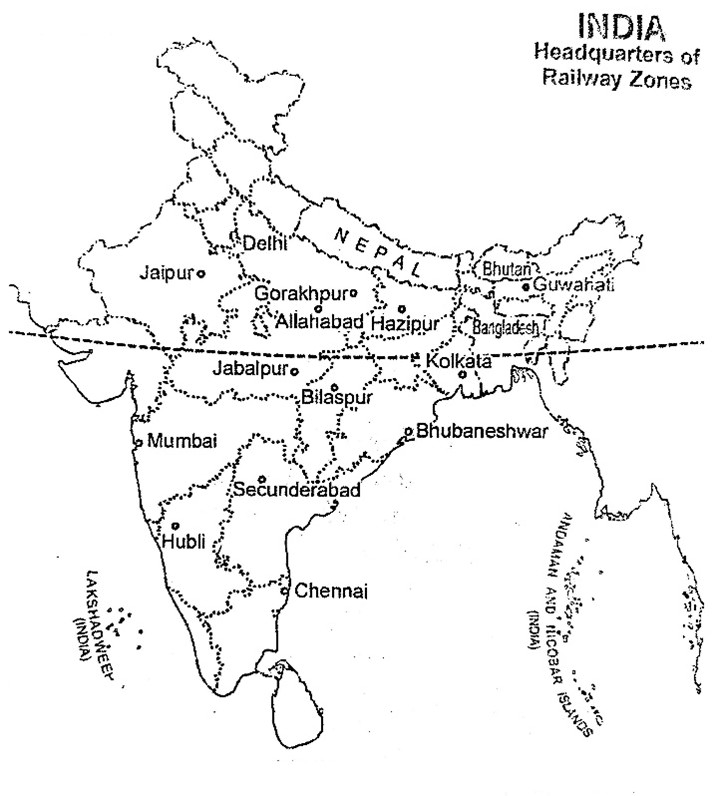
Q 2. Find out the current Railway zones and their headquarters. Also locate the headquarters of Railway zones on the map of India.
Ans 2:
Current Railway Zones | Their Headquarters |
1. Northern railway 2. North central railway 3. North-east railway 4. Eastern central railway 5. North-east frontier railway 6. Eastern railways 7. South-east railway 8. South-east central railway 9. East coast railway 10. Southern railway 11. South central railway 12. South-west railway 13. Central railway 14. Western railway 15. West central railway 16. North-west railway | Delhi Allahabad Gorakhpur Hazipur Guwahati Kolkata Kolkata Bilaspur Bhubaneshwar Chennai Secunderabad Hubli Mumbai Jabalpur Jaipur |
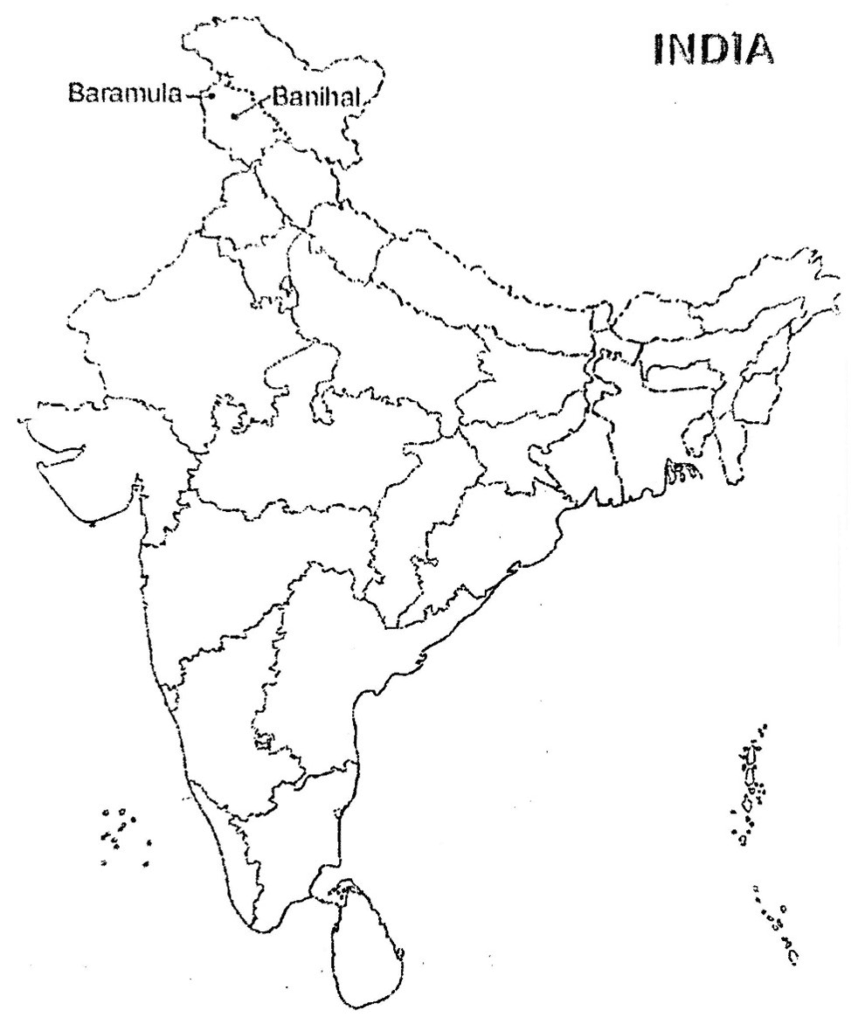
Q 3. Railway line has been extended from Banihal to Baramula in the Kashmir Valley. Locate these two towns on the map of India.
Ans 3:
Q 4. Why is air travel preferred in the north-eastern states?
Ans 4: due to the presence of these factor air travel is preferred in the north-eastern states of India:
- Geographical Challenges: Hilly and remote terrain makes road and rail travel difficult.
- Time Efficiency: Air travel significantly reduces travel time between states.
- Accessibility: Limited road and rail connectivity enhances reliance on flights.
- Safety: Air travel is often considered safer in regions prone to landslides and floods.
- Tourism Boost: Increased air connectivity supports tourism and economic development.
- Weather Conditions: Frequent weather disruptions can hinder ground transportation.
Activity
Q 5. On the map of India show important tourist places of your State/UT and its connectivity with other parts of the country by railways/roadways/airways. Discuss in the class:
(i) What type of tourism may be developed in your state/UT and why?
Ans (i): To develop tourism in a state or Union Territory (UT), consider these types:
- Cultural Tourism: Showcase local traditions, festivals, and heritage sites to attract visitors interested in diverse cultures.
- Ecotourism: Promote natural landscapes, wildlife sanctuaries, and sustainable practices to appeal to environmentally conscious travelers.
- Adventure Tourism: Offer activities like trekking, rock climbing, and water sports to attract thrill-seekers.
- Wellness Tourism: Develop wellness retreats focusing on yoga, Ayurveda, and spa experiences to attract health-conscious tourists.
- Culinary Tourism: Highlight local cuisine and food festivals to attract food lovers.
- Religious Tourism: Promote pilgrimage sites and spiritual retreats to attract faith-based travelers.
- Heritage Tourism: Preserve and promote historical monuments and ancient architecture to draw history enthusiasts.
(ii) Which areas in your state/UT you find more attractive for development of tourism and why?
Ans (ii): In Delhi, several areas hold great potential for further tourism development due to their rich historical, cultural, and modern attractions. Here are some key areas:
- New Delhi (Connaught Place and Lutyens’ Delhi)
- Why: Connaught Place is a hub for shopping, dining, and nightlife, while Lutyens’ Delhi boasts beautiful architecture, museums, and art galleries.
- Potential: Adding cultural events, improving transportation, and highlighting lesser-known landmarks can boost appeal.
- Qutub Minar Complex and Mehrauli Archaeological Park
- Why: The Qutub Minar is a UNESCO World Heritage site and, along with nearby structures, showcases Delhi’s medieval architecture.
- Potential: Enhanced pathways, better signage, and evening light shows can create a richer visitor experience.
- Humayun’s Tomb and Nizamuddin Basti
- Why: This area combines the grandeur of Mughal architecture with the spiritual charm of Nizamuddin Dargah, making it a cultural hotspot.
- Potential: Developing cultural tourism through Sufi music nights, food festivals, and handicrafts markets could attract diverse tourists.
- Garden of Five Senses and Saket
- Why: It offers a peaceful, nature-focused experience with curated gardens and art installations, close to shopping centers and restaurants in Saket.
- Potential: More eco-friendly activities, interactive exhibits, and open-air events would make it a prime spot for leisure tourism.
- Yamuna Riverfront
- Why: With scenic views and open spaces, the Yamuna Riverfront has potential for recreational activities and river tourism.
- Potential: Creating promenades, water sports facilities, and green parks could make it an attractive destination for both locals and tourists.
- Delhi Haat and INA Market
- Why: Known for traditional crafts, handlooms, and cuisine from various states, Delhi Haat is a go-to for cultural experiences.
- Potential: Expanding the range of handicrafts, adding cultural workshops, and hosting state-specific festivals can make it more engaging.
By developing these areas with better infrastructure, sustainable tourism practices, and cultural activities, Delhi can strengthen its appeal as a diverse, tourist-friendly destination.
(iii) How tourism may be helpful for the economic development of a region adopting sustainable development approach?
Ans (iii): Tourism can significantly boost economic development in a region when combined with a sustainable development approach. Sustainable tourism creates jobs, supports local businesses, and stimulates investments in infrastructure, benefiting both visitors and residents. By focusing on eco-friendly practices, regions can preserve natural resources, reduce waste, and protect cultural heritage, ensuring long-term appeal. Sustainable tourism also promotes community involvement, fostering a sense of ownership and pride among locals, while generating revenue from eco-conscious tourists who value authentic, responsible travel experiences. This balance between economic growth and environmental preservation helps regions achieve steady, long-term economic benefits.
PROJECT WORK
Q 1. Prepare a project on the heritage tourism in India.
Ans 1: Heritage Tourism in India: A Journey Through Time
- Introduction
- Definition of Heritage Tourism: Explain what heritage tourism is and its significance. Highlight that it focuses on travel to experience the places, artifacts, and activities that authentically represent the stories and people of the past.
- Importance of Heritage Tourism in India: Discuss India’s rich cultural heritage and its global appeal due to ancient architecture, diverse religions, and cultural history.
- Objectives
- To understand the importance of heritage tourism in preserving India’s cultural legacy.
- To explore the impact of heritage tourism on India’s economy and local communities.
- To identify key heritage sites and regions that attract tourists.
- To discuss the challenges and conservation efforts related to heritage tourism.
- Historical Background of Heritage Sites in India
- Ancient Heritage: Mention sites like the Harappan Civilization (Mohenjo-Daro, Dholavira), Mauryan relics, and sites connected to Buddhism (Nalanda, Sanchi).
- Medieval Heritage: Discuss monuments from the Mughal era (Taj Mahal, Agra Fort), Rajputana (Amber Fort, City Palace in Jaipur), and Vijayanagar Empire (Hampi).
- Colonial Heritage: British-era structures (Victoria Memorial in Kolkata, Gateway of India in Mumbai), and Portuguese and French architecture in Goa and Pondicherry, respectively.
- Major Heritage Tourism Destinations
- North India: Delhi’s historical sites, Rajasthan’s forts and palaces, Varanasi’s ghats and temples.
- South India: Hampi, Mahabalipuram, the Chola temples, Mysore Palace, and the temples of Kerala.
- East India: Konark Sun Temple in Odisha, Nalanda University in Bihar, and Victoria Memorial in West Bengal.
- West India: Ajanta and Ellora Caves, Elephanta Caves, and Goa’s heritage churches.
- Northeast India: Kaziranga National Park (a UNESCO World Heritage site), monasteries in Sikkim and Arunachal Pradesh.
- UNESCO World Heritage Sites: List the major UNESCO-recognized sites in India.
- Benefits of Heritage Tourism
- Economic Impact: Revenue generation, employment opportunities, and contribution to the national GDP.
- Social Impact: Enhancing pride and knowledge of local cultures, inspiring preservation of local customs.
- Conservation of Cultural Sites: Increased resources for preserving ancient monuments and structures.
- Challenges of Heritage Tourism
- Overcrowding: Managing high tourist footfall at popular sites.
- Environmental Impact: Pollution, waste, and natural wear and tear.
- Cultural Erosion: Impact on local customs and traditions.
- Infrastructure: Need for better roads, facilities, and security for tourists.
- Conservation and Preservation Efforts
- Government Initiatives: ASI (Archaeological Survey of India) conservation programs, Swadesh Darshan Scheme, PRASAD Scheme, Adopt a Heritage scheme.
- Role of NGOs and Private Sector: Contributions of private organizations in maintaining heritage sites.
- Community Involvement: Local community involvement in conservation efforts.
- Case Studies
- Taj Mahal, Agra: How it manages the influx of tourists and preservation measures.
- Jaipur City (a UNESCO Heritage City): How the city balances tourism with heritage conservation.
- Hampi: Restoration efforts and how they attract tourists worldwide.
- Digital Heritage Tourism
- Virtual Tours: The rise of virtual tours for Indian heritage sites (e.g., Google Arts & Culture).
- Use of Technology: How AI, AR, and VR are enhancing the experience of heritage tourism.
- Social Media Influence: Role of social media in promoting heritage tourism in India.
- Future Prospects
- Potential Growth: With growing interest in cultural tourism, what the future holds for heritage tourism in India.
- Sustainable Tourism: Discuss the concept of sustainable heritage tourism and potential steps for balance.
- Conclusion
- Summarize the importance of heritage tourism in preserving India’s past while also providing economic benefits.
- Highlight the need for sustainable practices to protect these cultural treasures for future generations.
- Supporting Materials (for a presentation)
- Images: Photographs of heritage sites, monuments, temples, and structures.
- Charts & Graphs: Statistics on tourism revenue, visitor numbers, and economic impact.
- Maps: Mark heritage sites across India for visual reference.
- Interactive Elements: QR codes linking to virtual tours or official site information.
EXERCISES
1. Multiple choice questions.
(i). Which two of the following extreme locations are connected by the east-west corridor?
(a) Mumbai and Nagpur
(b) Silchar and Porbandar
(c) Mumbai and Kolkata
(d) Nagpur and Siligudi
Ans 1: (b) Silchar and Porbandar: The East-West Corridor is part of India’s National Highways Development Project (NHDP) and connects Silchar in Assam (East) to Porbandar in Gujarat (West).
(ii) Which mode of transportation reduces trans-shipment losses and delays?
(a) Railways
(b) Roadways
(c) Pipeline
(d) Waterways
Ans (ii) (c) Pipeline: Pipelines are the most efficient for reducing trans-shipment losses and delays, especially when transporting liquids and gases over long distances, as they have fewer handling stages and a continuous flow, minimizing potential for delays and losses.
(iii) Which one of the following states is not connected with the H.V.J. pipeline?
(a) Madhya Pradesh
(b) Maharashtra
(c) Gujarat
(d) Uttar Pradesh
Ans (iii) (b) Maharashtra: The Hazira-Vijaipur-Jagdishpur (HVJ) pipeline primarily passes through the states of Gujarat, Madhya Pradesh, and Uttar Pradesh, but it does not connect with Maharashtra.
(iv) Which one of the following ports is the deepest land-locked and well-protected port along the east coast?
(a) Chennai
(b) Paradwip
(c) Tuticorin
(d) Vishakhapatnam
Ans (iv) (d) Vishakhapatnam: It is known for its natural harbor and is one of the largest ports in India, providing good protection against cyclonic weather conditions.
(v) Which one of the following is the most important modes of transportation in India?
(a) Pipeline
(b) Railways
(c) Roadways
(d) Airways
Ans (v) (b) Railways
(vi) Which one of the following terms is used to describe trade between two or more countries?
(a) Internal trade
(b) International trade
(c) External trade
(d) Local trade
Ans (vi) (b) International trade.
2. Answer the following questions in about 30 words.
(i) State any three merits of roadways.
Ans (i): Three merits of roadways include:
- Accessibility: They connect remote areas to urban centers.
- Cost-effective: Building and maintaining roads is generally cheaper than railways.
- Flexible: Road transport offers door-to-door service, enhancing convenience.
(ii) Where and why is rail transport the most convenient means of transportation?
Ans (ii): Rail transport is most convenient in densely populated urban areas and regions with heavy freight traffic, as it efficiently moves large numbers of passengers and goods, reducing congestion and travel time.
(iii) What is the significance of the border roads?
Ans (iii): Border roads are crucial for national security, enabling military movement and logistical support. They enhance connectivity in remote areas, promote trade, and foster socio-economic development in border regions.
(iv) What is meant by trade? What is the difference between international and local trade?
Ans (iv): Trade refers to the exchange of goods and services. International trade occurs between countries, while local trade occurs within a specific region or country. International trade often involves more regulations and logistics.
3. Answer the following questions in about 120 words.
(i) Why are the means of transportation and communication calling the lifelines of a nation and its economy?
Ans (i): Means of transportation and communication are essential lifelines for a nation and its economy for several reasons:
- Facilitates Trade: Efficient transportation networks enable the movement of goods and services, enhancing trade both domestically and internationally.
- Boosts Economic Growth: Reliable communication systems support businesses by providing timely information and connectivity, which is vital for decision-making and operational efficiency.
- Enhances Connectivity: Transportation links rural and urban areas, fostering regional development and accessibility to markets, education, and healthcare.
- Promotes Tourism: Well-developed transport and communication infrastructure attracts tourists, generating revenue and creating jobs.
- Supports Emergency Response: Efficient systems are crucial for responding to emergencies, ensuring timely aid and maintaining public safety.
Together, they create a robust framework that underpins economic activity and societal progress.
(ii) Write a note on the changing nature of the international trade in the last fifteen years.
Ans (ii): Over the past fifteen years, India’s international trade has undergone significant transformation, marked by rapid growth and diversification. The country has shifted from being primarily reliant on traditional sectors like textiles and agriculture to embracing a more balanced portfolio, including services, technology, and manufacturing.
The introduction of policies like Make in India has spurred domestic production and attracted foreign investment. India’s trade relationships have also expanded, with increasing exports to emerging markets in Asia, Africa, and Latin America, while imports have diversified to include high-tech goods and energy resources. The advent of digital trade has further enhanced India’s global trade participation, enabling startups and small businesses to access international markets more easily. Overall, these changes reflect India’s growing integration into the global economy.
Quiz drive
- Northern terminal of the North-south corridor.
- The headquarter of the southern railway zone.
- The rail gauge with a track width of 1.676 m.
- A Riverine Port.
- Busiest railway junction in Northern India.
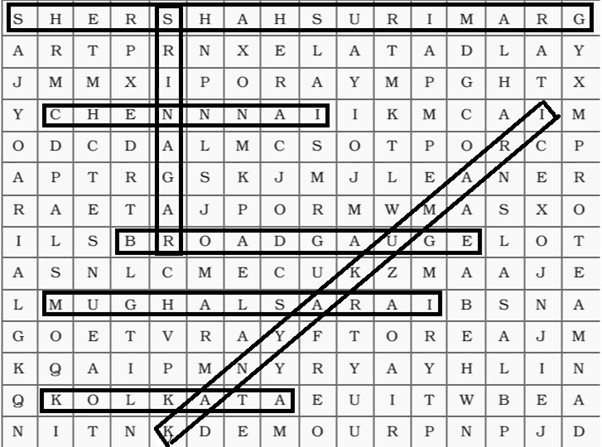
Activity
Start your search vertically, horizontally or diagonally and reach various destinations across the country!

Ans: Quiz drive
Srinagar
Sher Shah Suri Marg
Chennai
Broad Gauge
Kanyakumari
Kolkata
Mughal Sarai