
Chapter 6 - Mijbil the Otter Question Answer for Class 10 (English)
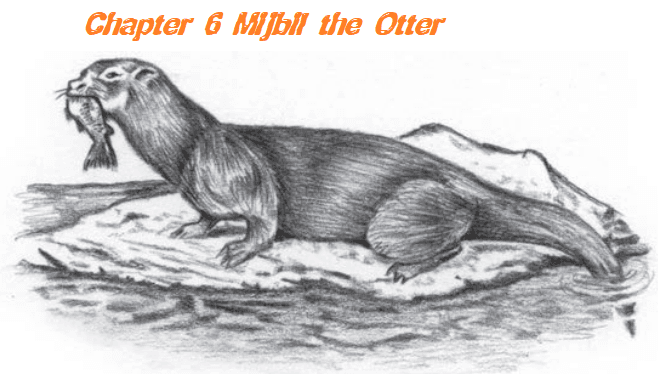
Chapter 6 – Mijbil the Otter Question Answer
Ultimate NCERT Solutions for Class 10 (English)
Updated Solution 2024-2025 Updated Solution 2024-2025
NCERT Solutions for Class 10 English, Chapter 6 – Mijbil the Otter Question Answer & summary
Chapter 6 – Mijbil the Otter
Summary of Chapter 6: Mijbil the Otter (English)
This chapter is an excerpt from The Ring of Bright Water by Gavin Maxwell. It narrates the author’s experience of adopting an otter named Mijbil.
The story begins when the author decides to have an otter as a pet instead of a dog, inspired by the idea of keeping an otter from the marshes of Iraq. He names the otter Mijbil. Initially, Mijbil is shy but soon becomes playful and curious about his surroundings. The author describes Mijbil’s amusing antics, such as playing with water and running around the house.
When the time comes for Maxwell to return to England, he faces challenges while transporting Mijbil. Due to airline restrictions, he has to carry Mijbil in a box, but the otter escapes during the flight and causes a commotion among passengers. Eventually, Mijbil becomes comfortable in his new home in London, adapting well to city life.
The chapter beautifully captures the bond between the author and Mijbil, showcasing the otter’s intelligence, playfulness, and affection. It highlights the joys and challenges of keeping an unusual pet and emphasizes the deep connection between humans and animals.
Summary of Chapter 6: Mijbil the Otter (In Hindi)
यह अध्याय गेविन मैक्सवेल की पुस्तक द रिंग ऑफ़ ब्राइट वॉटर से लिया गया एक अंश है। यह लेखक द्वारा मिजबिल नाम की एक ऊदबिलाव को पालने के अनुभव का वर्णन करता है।
कहानी तब शुरू होती है जब लेखक इराक के दलदलों से ऊदबिलाव पालने की इच्छा से प्रेरित होकर, एक कुत्ते के बजाय ऊदबिलाव को पालतू बनाने का निर्णय लेता है। वह ऊदबिलाव का नाम मिजबिल रखता है। शुरुआत में मिजबिल शर्मीला होता है, लेकिन जल्द ही वह अपने आसपास के वातावरण के प्रति जिज्ञासु और खेलकूद वाला बन जाता है। लेखक मिजबिल के मनोरंजक व्यवहारों, जैसे पानी से खेलना और घर के चारों ओर दौड़ना, का वर्णन करता है।
जब मैक्सवेल को इंग्लैंड वापस जाने का समय आता है, तो मिजबिल को ले जाने में उसे कई चुनौतियों का सामना करना पड़ता है। एयरलाइन प्रतिबंधों के कारण, उसे मिजबिल को एक बक्से में रखकर ले जाना पड़ता है, लेकिन उड़ान के दौरान ऊदबिलाव बच निकलता है और यात्रियों के बीच हलचल मचा देता है। अंततः, मिजबिल लंदन में अपने नए घर में आरामदायक हो जाता है और शहरी जीवन के अनुकूल ढल जाता है।
यह अध्याय लेखक और मिजबिल के बीच के गहरे बंधन को खूबसूरती से दर्शाता है, जिसमें ऊदबिलाव की बुद्धिमत्ता, चंचलता और स्नेह को उजागर किया गया है। यह एक असामान्य पालतू जानवर रखने के सुख और चुनौतियों को दिखाता है तथा मनुष्यों और जानवरों के बीच के गहरे संबंध पर प्रकाश डालता है।
Activity
Q 1: Do you have a pet? If you do, you perhaps know that a pet is a serious responsibility. Read in the box below what the SPCA — the Society for the Prevention of Cruelty to Animals — has to say about how to care for a pet.
Owning a pet is a lifetime of commitment (up to ten years or more if you own a dog or a cat) involving considerable responsibility. The decision to acquire one, therefore, should be made by the whole family. Without full agreement by everyone, the pet could end up unwanted. Puppies and kittens are so adorable, it is easy to understand why adults and children alike would be attracted to them. Unfortunately, their cute looks are often a disadvantage, because people purchase them without consideration and the knowledge on how to take proper care of them. The basic points you should keep in mind before adopting a puppy are: • an annual dog licence in accordance with government regulations • its annual vaccination against major diseases • toilet training • regular grooming and bathing • obedience training • don’t forget you should feed your pet a balanced diet • socialisation (many dogs are kept confined in cages or tied up to stop them from dirtying the garden or from chewing on shoes — this is wrong) is very important • a daily dose of exercise, affection and play Reading up on the subject beforehand is another important requirement and will guide you towards being a responsible pet owner. Selected pet shops and major book stores provide books on the care of various breeds/pets |
Ans 1: Owning a pet is a long-term commitment (up to ten years or more for dogs and cats) and involves significant responsibility. The decision to get a pet should be made by the whole family. If everyone is not fully agreed, the pet may end up neglected.
Puppies and kittens are adorable, which is why both adults and children are drawn to them. However, their cuteness can sometimes be a disadvantage because people buy them impulsively without knowing how to properly care for them.
Key Points to Consider Before Adopting a Puppy:
- Obtain an annual dog license as per government regulations.
- Ensure yearly vaccinations against major diseases.
- Provide toilet training.
- Maintain regular grooming and bathing.
- Teach obedience training.
- Feed your pet a balanced diet.
- Allow for socialization(many dogs are locked in cages or tied up to prevent them from soiling the garden or chewing shoes—this is wrong).
- Give your pet daily exercise, affection, and playtime.
Researching pet care beforehand is another essential step to becoming a responsible pet owner. You can find books on pet care at selected pet shops and major bookstores.
Q 2: Imagine someone has gifted you a pet. With your partner’s help, make a list of the things you need to know about the pet in order to take good care of it. One has been done for you.
(i) The food it eats.
(ii) ______________
(iii) _____________
(iv) _____________
(v)______________
Ans 2: Here’s a list of things you need to know about your new pet to take good care of it:
(i) The food it eats.
(ii) Its habitat and living conditions (cage, tank, free-roaming, etc.).
(iii) Its exercise and play requirements.
(iv) Common health issues and vaccination schedule.
(v) Grooming and hygiene needs (bathing, brushing, nail trimming, etc.).
Additional points (if needed):
(vi) Social behavior (Does it need companionship or prefer solitude?)
(vii) Training requirements (housebreaking, commands, etc.)
(viii) Lifespan and long-term care commitments.
(ix) Emergency care and nearest vet details.
(x) Safe and harmful items/toys for the pet.
Q 3: Otters are found in large numbers in the marshes (i.e. wet areas near lakes, rivers or seas) near Basra, a town in Iraq. Imagine you wanted to bring an otter from Iraq to London, as a pet. What special arrangements would you need to make for your pet otter? You would need to find a place with lots of water, for example. What other points should you think about? The information about Iraq and London given below may help you.
| IRAQ | LONDON |
| Iraq has mostly broad plains and marshes along the Iranian border in the south, with large flooded areas. A large part of Iraq’s land area is desert, so it has cool winters and dry, hot and cloudless summers. The mountain areas near Iran and Turkey have cold winters. There is heavy snowfall there, and when the snow melts in spring, it causes floods in central and southern Iraq. | London has a large population and is a very busy city. In addition to multi storied buildings, however, it has many open spaces or parks. It has a temperate climate (i.e. it is neither very hot, nor very cold), with regular but generally light rainfall or snow throughout the year. The warmest month is July, and the coolest month is January. February is the driest month. Snow is not very common in London. |
Ans 3: Special Arrangements Needed to Bring an Otter from Iraq to London
Bringing an otter from the marshes of Iraq to London as a pet would require careful planning and special arrangements to ensure the otter’s health, safety, and comfort. Here are the key points to consider:
- Suitable Habitat with Ample Water
- Otters are semi-aquatic animals and need constant access to clean water for swimming and playing.
- In London, you would need a large enclosure with a pond or pool that mimics their natural marsh habitat.
- Since London has a temperate climate (neither too hot nor too cold), you may need a temperature-controlled indoor space for colder months.
- Legal and Travel Requirements
- Check UK pet import laws—otters may be classified as exotic pets, requiring special permits.
- Ensure proper vaccinations, health certificates, and quarantine rules before travel.
- Airlines have strict regulations for transporting live animals, so a secure, ventilated travel crate would be necessary.
- Diet and Nutrition
- Otters in Iraq feed on fish, crabs, and small aquatic creatures.
- In London, you would need a steady supply of fresh fish, shellfish, and specialized otter food to meet their dietary needs.
- Social and Behavioral Needs
- Otters are highly social and playful—they need mental stimulation and interaction.
- If kept alone, they may become stressed, so consider getting a pair (if legally allowed).
- Provide toys, tunnels, and enrichment activities to keep them engaged.
- Veterinary Care
- Find a vet experienced with otters or exotic animals in London.
- Regular health check-ups are necessary to monitor for diseases common in captive otters.
- Safety and Security
- Otters are curious and can be escape artists—ensure their enclosure is escape-proof with strong locks.
- Protect them from household hazards like electrical wires or toxic plants.
- Climate Adaptation
- Iraq has hot summers and cool winters, while London has mild but damp weather.
- Otters have thick fur, but in London’s colder months, they may need a heated shelter to stay warm.
Conclusion:
Bringing an otter from Iraq to London would require significant effort—legal permissions, a proper aquatic habitat, specialized diet, and expert veterinary care. Otters are not typical pets, so responsible ownership means ensuring their physical and emotional well-being in an urban environment like London.
Chapter 6 – Mijbil the Otter Question Answer & Summary
Updated Solution 2024-2025
Oral Comprehension Check
Q 1. What ‘experiment’ did Maxwell think Camusfearna would be suitable for?
Ans 1: Maxwell considered Camusfearna an ideal place for keeping an otter as a pet because of its natural surroundings with abundant water. He wanted to experiment whether an otter could adapt to domestic life in such an environment. The remote location with streams and ponds made it perfect for observing the otter’s natural behaviors while living with humans.
Q 2. Why does he go to Basra? How long does he wait there, and why?
Ans 2: Maxwell went to Basra to collect his mail from Europe. However, due to postal delays, he had to wait there for five days as his mail hadn’t arrived. This unexpected wait gave him time to explore the local markets where he eventually got Mijbil, changing his plans completely.
Q 3. How does he get the otter? Does he like it? Pick out the words that tell you this.
Ans 3: Maxwell received the otter as a gift from an Arab friend. He immediately grew fond of Mijbil, describing him with words like “intelligent,” “fun-loving,” and “full of charming antics.” Phrases such as “tremendously attached” and “never a dull moment” clearly show Maxwell’s deep affection for his unusual pet.
Q 4. Why was the otter named ‘Maxwell’s otter’?
Ans 4: The otter was scientifically named ‘Maxwell’s otter’ (Lutrogale perspicillata maxwelli) because it belonged to a previously unknown subspecies. As Gavin Maxwell was the first to bring this particular type of otter to scientific attention, zoologists honored him by naming the species after him.
Q 5. Tick the right answer. In the beginning, the otter was
- aloof and indifferent
- friendly
- hostile
Ans 5: aloof and indifferent: Initially, Mijbil was shy and kept his distance, taking time to adjust to Maxwell. The text mentions he was “completely indifferent” at first, showing no interest in his new surroundings or owner, which gradually changed as he became more comfortable.
Q 6. What happened when Maxwell took Mijbil to the bathroom? What did it do two days after that?
Ans 6: When first taken to the bathroom, Mijbil went wild with excitement, splashing and rolling in the water joyfully. Two days later, he independently went to the bathroom, turned on the tap himself, and played under the running water, demonstrating his intelligence and love for water.
Oral Comprehension Check
Q 1. How was Mij to be transported to England?
Ans 1: Mijbil the otter was transported to England in a specially designed box as per airline regulations. Maxwell placed him inside a small crate with airholes, ensuring it was secure for the flight. However, Mijbil disliked confinement and struggled inside. The airline initially refused to allow the otter on board, but after negotiations, Maxwell was permitted to carry Mijbil as a passenger, keeping the box on his lap during the journey.
Q 2. What did Mij do to the box?
Ans 2: Mijbil was restless inside the box and tried to escape. He scratched and damaged the airholes, making them larger. Eventually, he managed to push his way out, causing chaos in the airplane. His actions forced Maxwell to hold him on his lap, as the box was no longer secure enough to contain the energetic otter.
Q 3. Why did Maxwell put the otter back in the box? How do you think he felt when he did this?
Ans 3: Maxwell put Mijbil back in the box to follow airline rules and avoid further disturbance. However, he felt guilty and anxious because he knew Mijbil was distressed inside. As a caring pet owner, he was torn between following regulations and ensuring his otter’s comfort, making the situation emotionally difficult for him.
Q 4. Why does Maxwell say the airhostess was “the very queen of her kind”?
Ans 4: Maxwell called the airhostess “the very queen of her kind” because she showed exceptional kindness and understanding. When Mijbil escaped, she calmly reassured the passengers and allowed Maxwell to keep the otter on his lap. Her helpful and compassionate attitude made the journey smoother, earning her Maxwell’s deep admiration.
Q 5. What happened when the box was opened?
Ans 5: When the box was opened, Mijbil immediately escaped and dashed around the airplane, startling passengers. He ran wildly across seats, disappeared under legs, and caused panic until Maxwell finally caught him. The incident created chaos, but the airhostess helped calm the situation, allowing Maxwell to hold Mijbil for the rest of the flight.
Oral Comprehension Check
Q 1. What game had Mij invented?
Ans 1: Mijbil invented a unique game of playing with a rubber ball. He discovered that if the ball was rolled on the uneven floor of the house, it would bounce unpredictably. This amused him greatly, and he would chase it with excitement, often pushing it under furniture and then scrambling to retrieve it. Maxwell observed that Mij treated this activity like a self-designed sport, showcasing the otter’s intelligence and playful nature.
Q 2. What are compulsive habits? What does Maxwell say are the compulsive habits of
(i) school children
(ii) Mij?
Ans 2: Compulsive habits are repetitive actions that a person or animal feels an uncontrollable urge to perform. Maxwell compares them to human behaviors:
(i) School children – They often compulsively place their feet on center cracks or avoid stepping on lines while walking on pavement.
(ii) Mij – The otter had a habit of rushing along the boundary wall of the schoolyard, dragging his chest against it and jumping at intervals, as if following an invisible path.
Q 3. What group of animals do otters belong to?
Ans 3: Otters belong to the Mustelidae family, a group of carnivorous mammals that also includes weasels, badgers, and ferrets. They are semi-aquatic creatures, well-adapted to life in water with their webbed feet, streamlined bodies, and thick fur for insulation. Mijbil, being an otter, displayed typical traits of this family—playfulness, curiosity, and strong swimming skills.
Q 4. What guesses did the Londoners make about what Mij was?
Ans 4: Londoners were puzzled by Mij’s unusual appearance and made various wild guesses about his identity. Some mistook him for a baby seal, a squirrel, or even a walrus. Others thought he was a hippopotamus cub or a beaver. Since otters were rare in the city, people struggled to recognize him, leading to humorous and incorrect assumptions about the little creature.
Thinking about the text
Q 1. What things does Mij do which tell you that he is an intelligent, friendly and fun-loving animal who needs love?
Ans 1: Mijbil displays intelligence, friendliness, and a fun-loving nature through various actions:
- He quickly learns to open taps and play with water.
- He invents his own games, like rolling marbles on the floor.
- He enjoys splashing in the bathtub and creating water splashes.
- He nuzzles Maxwell’s face and neck affectionately, especially when scared (like during the flight).
- He adapts well to new environments, showing curiosity and playfulness.
These behaviors prove that Mij is not only clever but also emotionally attached to Maxwell, seeking love and companionship.
Q 2. What are some of the things we come to know about otters from this text?
Ans 2: From the text, we learn that:
- Otters are playful, intelligent, and enjoy water.
- They are curious and can invent their own games.
- They form strong bonds with humans if treated with care.
- They require freedom and dislike being caged.
- They can adapt to different environments, including cities.
- They communicate through actions and gestures, showing emotions like fear and affection.
Q 3. Why is Mij’s species now known to the world as Maxwell’s otter?
Ans 3: Mijbil belonged to a previously unknown otter species. Since Gavin Maxwell was the first to bring this particular otter to the attention of scientists, they named it Lutrogale perspicillata maxwelli (Maxwell’s otter) in his honor.
Q 4. Maxwell in the story speaks for the otter, Mij. He tells us what the otter feels and thinks on different occasions. Given below are some things the otter does. Complete the column on the right to say what Maxwell says about what Mij feels and thinks.
| What Mij does | How Mij feels or thinks |
| plunges, rolls in the water and makes the water splosh and splash | |
| Screws the tap in the wrong way | |
| Nuzzles Maxwell’s face and neck in the aeroplane |
Ans 4:
| What Mij Does | How Mij Feels or Thinks |
| Plunges, rolls in water, splashes around | Feels joyful and free, loves playing in water |
| Screws the tap the wrong way | Feels frustrated but keeps trying to learn |
| Nuzzles Maxwell’s face and neck in the plane | Feels scared and seeks comfort from Maxwell |
Q 5. Read the story and find the sentences where Maxwell describes his pet otter. Then choose and arrange your sentences to illustrate those statements below that you think are true. Maxwell’s description
(i) makes Mij seem almost human, like a small boy.
(ii) shows that he is often irritated with what Mij does.
(iii) shows that he is often surprised by what Mij does.
(iv) of Mij’s antics is comical.
(v) shows that he observes the antics of Mij very carefully.
(vi) shows that he thinks Mij is a very ordinary otter.
(vii) shows that he thinks the otter is very unusual.
Ans 5: True Statements:
(i) Makes Mij seem almost human, like a small boy – Maxwell describes Mij’s playful, childlike behavior.
(iii) Shows he is often surprised by what Mij does – Mij’s clever actions (like opening taps) amaze Maxwell.
(iv) Description of Mij’s antics is comical – His water games and chaotic behavior are humorously described.
(v) Shows he observes Mij’s antics carefully – Maxwell notes every detail of Mij’s habits.
(vii) Shows he thinks the otter is very unusual – Mij’s intelligence and behavior stand out.
False Statements:
(ii) (Not irritated) – Maxwell is patient and fond of Mij’s mischief.
(vi) (Not ordinary) – Mij is described as unique and extraordinary.
Thinking about the language
Q I: Describing a Repeated Action in the Past
To talk about something that happened regularly in the past, but does not happen any longer, we use would or used to. Both would and used to can describe repeated actions in the past.
(a) Mij would follow me without a lead and come to me when I called his name.
(b) He would play for hours with a selection of toys.
(c) On his way home… Mij would tug me to this wall.
(d) When I was five years old, I used to follow my brother all over the place.
(e) He used to tease me when Mother was not around.
To describe repeated states or situations in the past, however, we use only used to. (We cannot use would for states or situations in the past.) So we do not use would with verbs like be, have, believe, etc. Look at the following sentences.
(a) When we were young, we used to believe there were ghosts in school. (Note: believe shows a state of mind.)
(b) Thirty years ago, more women used to be housewives than now. (Note: be here describes a situation.)
From the table below, make as many correct sentences as you can using would and/or used to, as appropriate. (Hint: First decide whether the words in italics show an action, or a state or situation, in the past.) Then add two or three sentences of your own to it.
| Emperor Akbar | would used to | be fond of musical evenings. |
| Every evening, we | take long walks on the beach. | |
| Fifty years ago, very few people | own cars. | |
| Till the 1980s, Shanghai | have very dirty streets. | |
| My uncle | spend his holidays by the sea. |
Ans 1: Describing Repeated Actions in the Past
To describe actions that happened regularly in the past but no longer occur, we use “would” or “used to”. However, “used to” is also used for past states or situations, while “would” is only used for repeated actions.
Examples from the Chapter (Mijbil the Otter):
- Mij would follow me without a lead and come when I called his name. (repeated action)
- He would play for hours with his toys. (repeated action)
- Mij would tug me towards the wall on his way home. (repeated action)
- I used to follow my brother everywhere when I was five. (repeated action)
- He used to tease me when Mother wasn’t around. (repeated action)
For states or situations, only “used to” is correct:
- We used to believe in ghosts as children. (state of mind)
- More women used to be housewives in the past. (past situation)
Correct Sentences from the Given Table:
- Emperor Akbar used to be fond of musical evenings. (state)
- Every evening, we would take long walks on the beach. (repeated action)
- Fifty years ago, very few people used to own cars. (past situation)
- Till the 1980s, Shanghai used to have very dirty streets. (past situation)
- My uncle would spend his holidays by the sea. (repeated action)
Additional Sentences:
- She would always feed stray dogs on her way to school. (repeated action)
- People used to travel by bullock carts before cars became common. (past situation)
- My grandmother would tell me bedtime stories every night. (repeated action)
This exercise helps distinguish between “would” (for habitual past actions) and “used to” (for both actions and past states).
Q II: Noun Modifiers
To describe or give more information about a noun (or to modify a noun), we use adjectives or adjectival phrases. Look at these examples from the text:
(a) An eminently suitable spot (c) Symmetrical pointed scales
(b) His wide, flat belly (d) A ricocheting bullet
Nouns can also be used as modifiers:
(a) The dinner party
(b) A designer dress
(c) The car keys
We can use more than one noun as modifier. Proper nouns can also be used:
(a) The Christmas dinner party
(b) A silk designer dress
(c) The Maruti car keys
In the examples below, there is an adjectival phrase in front of a noun modifier:
(a) The lovely Christmas party
(b) A trendy silk designer dress
(c) The frightfully expensive golden Maruti car keys
Q 1. Look at these examples from the text, and say whether the modifiers (in italics) are nouns, proper nouns, or adjective plus noun.
(i) An otter fixation (iv) The London streets
(ii) The iron railings (v) soft velvet fur
(iii) The Tigris marshes (vi) A four-footed soccer player
Ans 1: Noun Modifiers
Noun modifiers are words or phrases that describe or give more information about a noun. They can be:
- Nouns (e.g., dinner party)
- Proper Nouns (e.g., Christmas dinner party)
- Adjective + Noun (e.g., lovely Christmas party)
Identifying Modifiers in the Given Examples:
| Example | Type of Modifier |
| (i) An otter fixation | Noun (common noun modifying “fixation”) |
| (ii) The iron railings | Noun (material noun modifying “railings”) |
| (iii) The Tigris marshes | Proper Noun (name of a river modifying “marshes”) |
| (iv) The London streets | Proper Noun (name of a city modifying “streets”) |
| (v) soft velvet fur | Adjective (soft) + Noun (velvet) modifying “fur” |
| (vi) A four-footed soccer player | Adjective (four-footed) modifying “soccer player” |
Key Observations:
- Common Nouns as Modifiers: otter, iron
- Proper Nouns as Modifiers: Tigris, London
- Adjective + Noun as Modifiers: soft velvet, four-footed
This exercise helps in understanding how different types of words (nouns, proper nouns, adjectives) can function as modifiers to add detail to a noun.
Q 2. Given below are some nouns, and a set of modifiers (in the box). Combine the nouns and modifiers to make as many appropriate phrases as you can. (Hint: The nouns and modifiers are all from the texts in this book.)
| temple | girls | triangle | dresses |
| person | thoughts | Boys | roar |
| gifts | scream | farewell | expression |
| time | subject | landscape | handkerchief |
| crossing | flight | chatterbox | profession |
| physique | coffee | View | celebration |
| college | rough | hundred | stone | ordinary |
| love | uncomfortable | white | slang | slack |
| bare | railroad | tremendous | family | marriage |
| plump | invigorating | panoramic | heartbreaking | birthday |
| incorrigible | ridiculous | loud | first | three |
Ans 2: Here are the appropriate phrases formed by combining the given nouns and modifiers:
Noun + Modifier Phrases:
- Temple
- Stone temple
- Ancient temple (if considering implied meanings)
- Girls
- Plump girls
- Ordinary girls
- College girls
- Triangle
- Rough triangle
- Love triangle
- Dresses
- White dresses
- Slack dresses
- Birthday dresses
- Person
- Ordinary person
- Ridiculous person
- Incorrigible person
- Thoughts
- Heartbreaking thoughts
- First thoughts
- Boys
- Plump boys
- College boys
- Roar
- Tremendous roar
- Loud roar
- Gifts
- Birthday gifts
- First gifts
- Scream
- Loud scream
- Heartbreaking scream
- Farewell
- Heartbreaking farewell
- College farewell
- Expression
- Ridiculous expression
- Uncomfortable expression
- Time
- First time
- Ordinary time
- Subject
- Ridiculous subject
- Ordinary subject
- Landscape
- Panoramic landscape
- Rough landscape
- Handkerchief
- White handkerchief
- Bare handkerchief
- Crossing
- Railroad crossing
- First crossing
- Flight
- First flight
- Tremendous flight
- Chatterbox
- Incorrigible chatterbox
- Ridiculous chatterbox
- Profession
- Family profession
- Ordinary profession
- Physique
- Plump physique
- Rough physique
- Coffee
- Invigorating coffee
- Ordinary coffee
- View
- Panoramic view
- Tremendous view
- Celebration
- Birthday celebration
- Family celebration
Q III. Read this sentence:
He shook himself, and I half expected a cloud of dust. The author uses a cloud of dust to give a picture of a large quantity of dust. Phrases like this indicate a particular quantity of something that is not usually countable. For example: a bit of land, a drop of blood, a pinch of salt, a piece of paper.
- Match the words on the left with a word on the right. Some words on the left can go with more than one word on the right.
| (i) a portion of | – blood |
| (ii) a pool of | – cotton |
| (iii) flakes of | – stones |
| (iv) a huge heap of | – gold |
| (v) a gust of | – fried fish |
| (vi) little drops of | – snow |
| (vii) a piece of | – water |
| (viii) a pot of | – wind |
Ans 1: Here is the correct matching of the words on the left with the appropriate words on the right:
Matching Phrases Indicating Quantity
| Left Column | Right Column |
| (i) a portion of | – fried fish |
| (ii) a pool of | – water / blood |
| (iii) flakes of | – snow / gold |
| (iv) a huge heap of | – stones / gold |
| (v) a gust of | – wind |
| (vi) little drops of | – water / blood |
| (vii) a piece of | – paper / cotton |
| (viii) a pot of | – gold / water |
Explanations:
- A portion of fried fish – A serving quantity.
- A pool of water/blood – A collected amount of liquid.
- Flakes of snow/gold – Small, light pieces.
- A huge heap of stones/gold – A large piled quantity.
- A gust of wind – A sudden strong rush of air.
- Little drops of water/blood – Tiny liquid amounts.
- A piece of paper/cotton – A single unit of something.
- A pot of gold/water – A container holding a quantity.
2. Use a bit of/a piece of/a bunch of/a cloud of/a lump of with the italicised nouns in the following sentences. The first has been done for you as an example.
(i) My teacher gave me some advice. My teacher gave me a bit of advice.
(ii) Can you give me some clay, please. ________________________________
(iii) The information you gave was very useful. ________________________________
(iv) Because of these factories smoke hangs over the city. ___________________________
(v) Two stones rubbed together can produce sparks of fire. ___________________________
(vi) He gave me some flowers on my birthday. ________________________________
Ans 2 : Here are the sentences with the appropriate quantifiers (a bit of/a piece of/a bunch of/a cloud of/a lump of):
(i) My teacher gave me a bit of advice. (already done)
(ii) Can you give me a lump of clay, please? (since clay is a soft, shapeless mass)
(iii) The piece of information you gave was very useful. (information is uncountable, “a piece” makes it singular)
(iv) Because of these factories, a cloud of smoke hangs over the city. (smoke spreads like a cloud)
(v) Two pieces of stone rubbed together can produce sparks of fire. (stone is solid, so “piece” fits)
(vi) He gave me a bunch of flowers on my birthday. (flowers are grouped together in a bunch)
Key Takeaways:
- “A lump of” → Used for thick, shapeless substances (clay, sugar, coal).
- “A piece of” → Used for solid, uncountable things (information, stone, paper).
- “A cloud of” → Used for things that spread in the air (smoke, dust).
- “A bunch of” → Used for grouped items (flowers, keys, bananas).
Speaking
Q 1: You have seen how Maxwell describes Mij the otter’s feelings and thoughts by watching him. Play the game of dumb charades. Take turns to express a feeling or thought silently, through gestures. Let the class speak out their guesses about the feelings or thoughts you are trying to express.
Ans 1: Dumb Charades: Expressing Feelings & Thoughts (Inspired by Mij the Otter)
How to Play:
- Silent Acting: A student acts out a feeling/thought using only facial expressions and body language (no sounds!).
- Class Guesses: The rest of the class tries to guess the emotion or thought.
- Discussion: Compare how Maxwell interpreted Mij’s actions vs. how humans express similar feelings.
Example Prompts (Feelings/Thoughts to Act Out):
- Curiosity (Mij exploring new objects) → Wide eyes, tilting head, cautious touching.
- Excitement (Mij playing with water) → Jumping, splashing, fast movements.
- Fear (Mij’s first flight experience) → Crouching, trembling, hiding face.
- Affection (Mij nuzzling Maxwell) → Gentle touches, smiling, leaning close.
- Annoyance (Mij when confined) → Crossed arms, huffing, turning away.
- Surprise (Mij discovering a mirror) → Gasping, startled jumps, pointing.
Classroom Activity Flow:
- Individual Turns: Each student picks a slip with a feeling/thought (from a jar) and acts it out.
- Guessing Time: Class shouts out guesses (e.g., “Is it excitement?”).
- Reflection: Discuss how animals like Mij show similar emotions differently (e.g., wagging tails vs. human smiles).
Teacher’s Note: Highlight how Maxwell’s observations of Mij’s behavior (like tugging his coat) helped him understand the otter’s unspoken feelings—just like in charades!
Writing
Q 1: Write a description of a person or an animal (such as a pet) that you know very well and love very much. Questions (4) and (5) in ‘Thinking about the Text’ will have given you some idea about how to do this. Mention some things the person or animal does, what you think the person or animal feels, etc.
Ans 1: My Beloved Pet – Max, the Golden Retriever
Max, my golden retriever, is more than just a pet—he’s my best friend and the heart of our home. With his soft, honey-colored fur and warm brown eyes that sparkle with mischief, he has a way of making everyone around him smile.
Max is full of energy and curiosity. Every morning, he greets me with an enthusiastic wag of his tail and a playful nudge, as if saying, “Wake up! It’s time for fun!” He loves his daily walks, sniffing every bush and chasing after squirrels (though he never catches them). When he runs, his ears flop wildly, and his tongue hangs out in pure joy. At home, he follows me everywhere, even sitting outside the bathroom door, waiting patiently.
One of his favorite things is playing fetch. The moment he sees his favorite blue ball, his eyes light up, and he barks excitedly, begging me to throw it. No matter how many times I toss it, he brings it back, dropping it at my feet with a proud look, as if he’s accomplished something great.
Max also has a gentle, loving side. When I’m sad, he senses it immediately. He rests his head on my lap, his big eyes filled with concern, as if trying to comfort me. At night, he curls up beside my bed, his soft snores making me feel safe.
Though he can’t speak, I understand his feelings perfectly—his excitement, his loyalty, and even his occasional stubbornness when he refuses to come inside from the garden. He’s not just a dog; he’s family, and his unconditional love makes every day brighter.
Key Features Inspired by “Mijbil the Otter”:
- Actions & Habits (e.g., fetching, following, comforting).
- Expressions & Emotions (e.g., excitement in his eyes, concern when sad).
- Unique Traits (e.g., love for squirrels, stubborn moments).
- Bond with the Owner (e.g., waiting outside doors, sensing moods).
In this lesson
WHAT YOU CAN DO
Q 1. The events narrated in this text took place over half-a-century ago. Discuss with your class what changes have taken place over these years in
(i) what animals we can keep as pets (some species are protected under the laws for wildlife preservation)
(ii) the laws for exporting and importing or trading in animals
(iii) rules for transporting goods, pets, etc. on aircraft. The class might wish to do their own research on these questions and report their findings in class.
Ans 1: Changes Over the Last Half Century
(i) Animals We Can Keep as Pets:
- Many countries now have strict regulations on pet ownership.
- Some species, such as tigers, parrots, and turtles, are protected under wildlife preservation laws.
- Certain exotic animals, like otters and monkeys, are illegal to keep as pets in many places.
(ii) Laws for Exporting, Importing, and Trading Animals:
- International agreements, such as the Convention on International Trade in Endangered Species of Wild Fauna and Flora (CITES), regulate the trade of endangered animals.
- Many nations have banned or restricted the sale of exotic animals to prevent poaching and illegal wildlife trade.
- Stricter laws ensure ethical treatment and conservation of species.
(iii) Rules for Transporting Goods and Pets on Aircraft:
- Airlines have specific guidelines for transporting animals, including proper ventilation, temperature control, and safe enclosures.
- Some animals are banned from air travel due to stress and health risks.
- Many airlines require permits and health certificates for pet transportation.
Q 2. Ask students if they know of other examples of unusual pets or of wild animals which are trained to work for or amuse humans (eg dancing bears, lions and tigers in a circus, elephants trained to work or take part in ceremonies). Then lead students into a discussion about the ethics of keeping wild animals as pets: What are the difficulties these may entail? According to the students, what will the animal miss most when it is taken away from its natural habitat? Do they think that it is ‘cute’ to see Mij the otter on a leash? Get them to look at the situation from all points of view.
Ans 2: Ethics of Keeping Wild Animals as Pets
- Challenges:
- Wild animals require special care that most owners cannot provide.
- They may become aggressive as they grow, making them dangerous.
- Keeping them as pets can lead to stress and poor health for the animal.
- What the Animal Misses Most:
- Their natural habitat, where they can hunt, explore, and interact with their species.
- Freedom to roam instead of being confined to cages or small spaces.
- Their natural diet and lifestyle.
- Is It Cute to See Mij the Otter on a Leash?
- While it may look adorable, it is not natural or ethical to restrain a wild animal.
- The otter would be happier in the wild rather than as a pet.
Q 3. Visit the website wwf.org.uk/core/wildlife to know more about otters and otter conservation projects
Ans 3: Learning More About Otters and Conservation
- Students can visit wwf.org.uk/core/wildlife to explore information on otters and conservation efforts.
- They can learn about protecting otter habitats and preventing illegal pet trade.
Chapter 8 Poem: Fog
Summary of “Fog” by Carl Sandburg (English)
Carl Sandburg’s poem “Fog” is a short yet vivid depiction of how fog moves and behaves. The poet uses a metaphor, comparing the fog to a cat. Just like a cat, the fog arrives silently and gently, moving in on “little cat feet.” It then lingers, sitting quietly over the harbor and city, much like a cat observing its surroundings from a still position. Eventually, the fog moves on just as silently as it came.
The poem captures the quiet, mysterious, and fleeting nature of fog using simple yet powerful imagery.
Summary of “Fog” by Carl Sandburg (Hindi)
कार्ल सैंडबर्ग की कविता “Fog” (कोहरा) एक छोटी लेकिन प्रभावशाली कविता है, जो कोहरे की चाल और स्वभाव को दर्शाती है। कवि ने कोहरे की तुलना एक बिल्ली से की है। जिस तरह एक बिल्ली चुपचाप और कोमलता से आती है, उसी तरह कोहरा “छोटी बिल्ली के पैरों” पर आता है। फिर यह बंदरगाह और शहर के ऊपर स्थिर होकर बैठ जाता है, जैसे कोई बिल्ली शांतिपूर्वक अपने आसपास को देख रही हो। अंत में, कोहरा उसी तरह चुपचाप आगे बढ़ जाता है जैसे वह आया था।
यह कविता कोहरे की शांति, रहस्यपूर्णता और क्षणिकता को सरल लेकिन प्रभावशाली कल्पना के माध्यम से व्यक्त करती है।
Thinking about the poem
Q1: (i) What does Sandburg think the fog is like?
Ans (i): Carl Sandburg compares the fog to a cat. He describes how the fog moves silently and settles over the city, just like a cat that quietly approaches and watches its surroundings.
(ii) How does the fog come?
Ans (ii): The fog arrives quietly and gently, just like a cat walking on soft paws. It moves in slowly without making any noise.
(iii) What does ‘it’ in the third line refer to?
Ans (iii): In the third line, ‘it’ refers to the fog. The poet personifies the fog, making it seem like a living being those watches over the harbor and city.
(iv) Does the poet actually say that the fog is like a cat? Find three things that tell us that the fog is like a cat.
Ans (iv): No, the poet does not directly say that the fog is like a cat, but he implies it through imagery. Three things that suggest this comparison are:
- “On little cat feet” – This phrase compares the fog’s arrival to a cat’s silent footsteps.
- “It sits looking” – Just like a cat quietly observes its surroundings, the fog settles and watches over the city.
- “On silent haunches and then moves on” – This describes the fog behaving like a cat that crouches in stillness and then gracefully moves away.
Q 2: You know that a metaphor compares two things by transferring a feature of one thing to the other (See Unit 1).
(i) Find metaphors for the following words and complete the table below. Also try to say how they are alike. The first is done for you.
| Storm | tiger | pounces over the fields, growls |
| Train | ||
| Fire | ||
| School | ||
| Home |
Ans: (i): Finding Metaphors
| Word | Metaphor | Similarity (How they are alike) |
| Storm | Tiger | A storm, like a tiger, pounces over the fields and growls with thunder. |
| Train | Serpent | A train moves like a serpent, winding its way through the land. |
| Fire | Dragon | Fire, like a dragon, breathes out heat and destruction. |
| School | Beehive | A school, like a beehive, is full of busy students working together. |
| Home | Nest | A home, like a nest, provides warmth, comfort, and security. |
(ii) Think about a storm. Try to visualise the force of the storm, hear the sound of the storm, feel the power of the storm and the sudden calm that happens afterwards. Write a poem about the storm, comparing it with an animal.
Ans (ii): The Wild Horse
A storm gallops across the sky,
Like a wild horse, fierce and high.
Its hooves strike hard with thunder’s roar,
Winds like manes—untamed, they soar.
It neighs with lightning, bright and bold,
Charging fast, uncontrolled.
But as the beast tires, it slows,
Leaving behind a gentle glow.
The sky now calm, the world at rest,
The storm retreats to its distant nest.
Q 3: Does this poem have a rhyme scheme? Poetry that does not have an obvious rhythm or rhyme is called ‘free verse’.
Ans 3: No, Carl Sandburg’s poem “Fog” does not follow a rhyme scheme. It is written in free verse, meaning it lacks a fixed pattern of rhyme or rhythm. The poem flows naturally, much like the movement of fog itself, which aligns with the poet’s imagery. Free verse allows the poem to maintain a sense of quiet unpredictability, reinforcing the mysterious and fleeting nature of the fog.
Chapter 6 – Mijbil the Otter Question Answer & Summary
Updated Solution 2024-2025
This complete solution is prepared as per the latest syllabus of 2024-25. If you have any further queries, feel free to ask! 😊