
Chapter - 7 - The Necklace (Ncert Solutions) for Class 10 English
Ultimate NCERT Solutions for Chapter 7 – The Necklace
Updated Solution 2024-2025 Updated Solution 2024-2025
NCERT Solutions for Class 10 English, Chapter 7 – The Necklace
(Question/Answers, summary)
Chapter 7 – The Necklace
Summary of Chapter 7 – “The Necklace”(Eng)
“The Necklace” by Guy de Maupassant is a short story about Madame Mathilde Loisel, a woman who dreams of luxury and wealth but is married to a modest clerk, Monsieur Loisel.
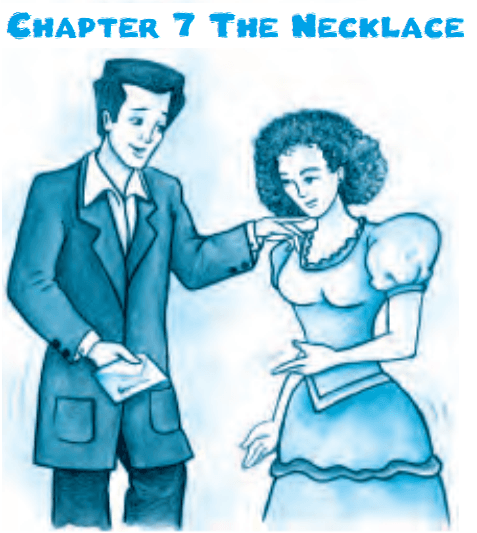
One day, her husband brings home an invitation to a grand ball, hoping to make her happy. However, Mathilde is upset because she has nothing elegant to wear. Her husband sacrifices his savings to buy her a beautiful dress, but she still feels incomplete without jewelry. She borrows a stunning diamond necklace from her wealthy friend, Madame Forestier, to complete her look.
At the ball, Mathilde enjoys the attention and admiration of others. However, after returning home, she realizes that she has lost the necklace. Unable to find it, she and her husband decide to buy a replacement, which costs 36,000 francs. To repay the debt, they live in extreme poverty for ten years, working tirelessly. Mathilde ages prematurely due to hardship.
One day, she meets Madame Forestier again and confesses the truth about losing the necklace. Shockingly, Madame Forestier reveals that the original necklace was a fake, worth only 500 francs. The story ends with a twist, highlighting the irony of Mathilde’s suffering and the theme of materialism, pride, and fate.
Summary of Chapter 7 – “The Necklace”(In Hindi)
गी द मोपासां द्वारा लिखी गई कहानी “हार” एक महिला, मैडम माथिल्द लोइज़ेल की कहानी है, जो ऐशो-आराम और धन की लालसा रखती है, लेकिन उसकी शादी एक साधारण क्लर्क, मोंसिएर लोइज़ेल से हुई है।
एक दिन, उसका पति उसे एक भव्यball (नृत्य सभा) का निमंत्रण लाकर देता है, यह सोचकर कि वह खुश होगी। लेकिन माथिल्द उदास हो जाती है क्योंकि उसके पास पहनने के लिए कोई सुंदर पोशाक नहीं है। उसका पति अपनी बचत खर्च करके उसे एक सुंदर पोशाक दिलाता है, लेकिन वह अब भी अधूरा महसूस करती है क्योंकि उसके पास आभूषण नहीं हैं। वह अपनी अमीर दोस्त, मैडम फॉरेस्टिएर से एक चमचमाता हीरे का हार उधार लेती है।
संध्या में, माथिल्द को सबका ध्यान और प्रशंसा मिलती है, जिससे वह अत्यंत प्रसन्न होती है। लेकिन घर लौटने के बाद उसे पता चलता है कि उसने हार खो दिया है। बहुत खोजने के बाद भी हार न मिलने पर, वह और उसका पति इसे बदलने का निर्णय लेते हैं। नया हार खरीदने के लिए उन्हें 36,000 फ़्रैंक खर्च करने पड़ते हैं। इस कर्ज को चुकाने के लिए वे दस साल तक कठिन परिश्रम करते हैं और अत्यंत गरीबी में जीवन बिताते हैं। संघर्ष और कठिनाइयों के कारण माथिल्द समय से पहले बूढ़ी दिखने लगती है।
एक दिन, माथिल्द की फिर से मैडम फॉरेस्टिएर से मुलाकात होती है, और वह सच्चाई बता देती है कि उसने हार खो दिया था और उसे बदलने के लिए उन्होंने अपना सब कुछ गवां दिया। यह सुनकर मैडम फॉरेस्टिएर चकित रह जाती है और बताती है कि असली हार नकली था और उसकी कीमत मात्र 500 फ़्रैंक थी।
कहानी एक चौंकाने वाले मोड़ के साथ समाप्त होती है, जो विडंबना को दर्शाती है और भौतिकवाद, अभिमान, और भाग्य की क्रूरता जैसे विषयों पर प्रकाश डालती है।
Question Answers
READ AND FIND OUT
Q 1. What kind of a person is Mme Loisel — why is she always unhappy?
Answer 1: Mme was a beautiful woman, but she struggled with unhappiness and dissatisfaction due to her modest background. Born into a poor family, she believed that her destiny had unfairly deprived her of a life of luxury. She felt she was meant for a life of comfort and elegance, but without a dowry, she couldn’t hope to marry a wealthy or well-known husband. Marrying someone with a humble job, like a clerk, was not what she envisioned. Her family’s poverty caused her constant frustration and resentment.
Q 2. What kind of a person is her husband?
Answer 2: Mr. Loisel was a modest, hardworking clerk with a simple lifestyle. He was a caring and thoughtful husband, always willing to make sacrifices to keep his wife happy. He enjoyed the simple pleasures, like homemade meals and fresh flowers, and gave in to his wife’s wish for a new dress. Mr. Loisel was an honest, selfless person who deeply loved his wife.
READ AND FIND OUT
Q 1. What fresh problem now disturbs Mme Loisel
Answer 1: Mme. Loisel now has a beautiful dress ready for the party, but she lacks any jewelry to complement her outfit and enhance her appearance.
Q 2. How is the problem solved?
Answer 2: Her husband suggested that she borrow some jewelry from her wealthy friend, Madame Forestier. Madame Loisel liked the idea, so she went to her friend and borrowed a beautiful necklace that matched her dress perfectly, adding to her elegance and charm.
Chapter 7 The Necklace
Updated Solution 2024-2025
READ AND FIND OUT
Q 1. What do M. and Mme Loisel do next?
Answer 1: They began by thoroughly checking the folds of the dress, the cloak, and even the pockets, but the necklace was nowhere to be found. Mr. Loisel retraced every step they had taken on foot, hoping to spot it, but he had no luck. Determined, he visited the police station and the cab office, and even placed an advertisement in the newspaper with a reward for anyone who found it.
To buy some time, he composed a letter for his wife to send to Mme Forestier, explaining that the clasp on the necklace had broken and it was being repaired. After waiting a week with no word, they realized their only option might be to replace it.
Q 2. How do they replace the necklace?
Answer 2: “After searching the market thoroughly, they finally found a necklace that looked just like the original. It was priced at thirty-six thousand francs. Loisel had eighteen thousand francs inherited from his father, and he borrowed the remaining amount at a high-interest rate. They bought the diamond necklace and returned it to Mrs. Forestier at her home.”
THINK ABOUT IT
Q 1. The course of the Loisels’ life changed due to the necklace. Comment.
Answer 1: The loss of the necklace marked a significant turning point in Loisel’s life, drastically altering their future. Faced with the urgent need to repay their debt, both struggled tirelessly to earn extra money and save every cent they could. Mrs. Loisel took on all the household chores herself, while Mr. Loisel worked additional part-time hours in the evenings after his regular job. Over time, the hardships took a toll on their appearance; Matilda, once proud of her beauty, became worn and rugged, reflecting the struggles they faced.
Q 2. What was the cause of Matilda’s ruin? How could she have avoided it?
Answer 2: Matilda was an attractive woman who had every reason to take pride in her appearance. However, her vanity ultimately led to her downfall. She dazzled at the ball, adorned with borrowed jewels, but lost them on her way home. The joy and success she experienced for just one evening came at a steep cost. Had she chosen to live within her means and not yearned for extravagance, she could have spared herself a great deal of suffering.
Q 3. What would have happened to Matilda if she had confessed to her friend that she had lost her necklace?
Answer 3: In response to question three, Matilda’s honest confession could have spared her a great deal of distress. The necklace she borrowed was lost due to her own negligence. Rather than sacrificing her beauty, youth, and happiness, she should have been open with Mrs. Forestier about what had happened. It’s possible that her wealthy friend would not have insisted on her repaying the full value of the necklace. Had Matilda chosen to confess, the outcome would likely have been much more positive and uplifting.
Q 4. If you were caught in a situation like this, how would you have dealt with it?
Answer 4: If I found myself in this situation, I would be honest with my friend about what happened to the necklace and how I lost it. I would express my deep regret for misplacing it and assure her that I am willing to replace it. I would ask her to let me know where I can buy a new one and what the cost would be.
By being sincere and showing my intention to make things right, I hope my friend would either forgive me if the necklace wasn’t too expensive or provide me with information about the replacement if it was costly. I firmly believe in the importance of honesty and prefer to be open, so I don’t carry any burdens in my mind.
TALK ABOUT IT
Q 1. The characters in this story speak in English. Do you think this is their language? What clues are there in the story about the language its characters must be speaking in?
Answer 1: I believe that English is not the language spoken by the characters in this story; rather, they communicate in French. This is evident from the characters’ names, which are distinctly French. Additionally, the use of “Mme” before the names Loisel and Forestier indicates that these characters are referred to in a French context, as “Mme” is a common abbreviation for “Madame” or “Mrs.” in French.
Q 2. Honesty is the best policy.
Answer 2: Honesty is undoubtedly the best policy. When you are sincere and truthful, you avoid the complications that come with deception. Lying often leads to a constant fear of being discovered, which creates unnecessary stress. The weight of dishonesty lingers in your mind, disrupting your peace of mind. Furthermore, this stress can contribute to various health issues, such as high blood pressure, heart problems, and digestive disorders.
In the story “The Necklace,” if Matilda had been honest about losing the necklace and confided in her friend, she could have spared herself the years of hard labor and the loss of her youth and beauty.
Q 3. We should be content with what life gives us.
Answer 3: I don’t entirely agree with the previous statement. If we adopt that mindset, what happens to our ability to progress and improve in life?
It’s essential to strike a balance: we shouldn’t be greedy, nor should we allow ourselves to feel disheartened by comparing our situation to others who may seem more fortunate. Instead, we have the power to change our circumstances, achieve financial success, and enhance our lives through hard work and determination. When we approach our goals with confidence, we create opportunities for ourselves. Remember, help often comes to those who are proactive.
Rather than envying others or feeling down about our current situation, we should focus our energy on self-improvement. Meanwhile, it’s important to live within our means and maintain a positive outlook on life.
Chapter 7 The Necklace – Updated Solution 2024-2025
This complete solution is prepared as per the latest syllabus of 2024-25. If you have any further queries, feel free to ask! 😊