
Ultimate NCERT Solutions for
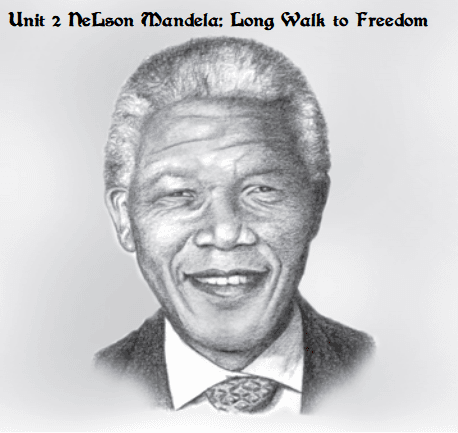
Unit 2 – Nelson Mandela Long Walk to Freedom
Updated Solution 2024-2025 Updated Solution 2024-2025
NCERT Solutions for Class 10 , Unit 2 – Nelson Mandela Long Walk to Freedom
(Question/Answers, summary)
Unit 2 – Nelson Mandela Long Walk to Freedom
Let’s Begin
Q 1. You have read the story about Nelson Mandela in your textbook, First Flight, and the struggle of the people of South Africa. Mandela draws our attention to the meaning and importance of freedom and leading a life with freedom.
He states that freedom comes with responsibilities. Discuss with your peers, how freedom and responsibilities go hand in hand.
_______________________________________________________________________________________________________________________________________________________________________________________________________________________________________________________________________________________________________________________________________.
Ans 1: Freedom is a precious gift, but it is not just about doing whatever we want. As Nelson Mandela said, true freedom means living in a way that respects and enhances the freedom of others. This shows that freedom and responsibility are closely connected.
When we are free, we have the power to make choices—but with that power comes the duty to make the right choices. For example, we have the freedom to speak, but we must be careful not to hurt others with our words. We have the freedom to study and pursue our dreams, but we must also work hard, stay disciplined, and help others along the way.
Mandela’s life teaches us that real freedom is not selfish. It includes fighting for justice, standing up for others, and building a better society. If people misuse their freedom and ignore their responsibilities, it can lead to harm and unfairness.
In conclusion, freedom without responsibility can be dangerous. But when freedom is used wisely—with honesty, kindness, and care—it becomes a powerful tool to create peace and equality in the world.
Reading Comprehension
Text I
Given below is a speech by Sardar Patel, one of the prominent figures of India’s freedom struggle. This is one of the convocation speeches delivered by him. Read the speech and answer the questions that follow.
Sardar Patel’s Call to Youth to build Character and be Disciplined
I must thank you for the affectionate and warm welcome which you have extended to me and for the love and regard which you have shown me by conferring this honor to me. Gifts are of many kinds those achieved by one’s own endeavor are good and deserved, but no gift should be conferred on one whose worthiness has not been tested.
By selecting me without assuring yourself of my fitness for the gift, you have laid me under a heavy debt and, by your injunctions that I should continue to prove worthy of it throughout my life, you have imposed on me a very difficult obligation. At present, I cannot say anything because I am bound by your love and affection; and, therefore, with your blessing and God’s grace, I pray that I may prove worthy of it.
Should I fail, the blame for my failure will be shared by you as well.
On this occasion, I wish to place before you a few thoughts which occur to my mind as incidental to our hard-won freedom. We have now won our freedom. But just as I am doubtful, if I deserved the honor that you have done me, you have also to think whether you have done everything to deserve freedom that you have attained after such a bitter and sustained struggle. There are people who think that having won freedom, there is nothing more to do about it.
Freedom has come to us through sacrifices. Those who made sacrifices tasted the fruit of their efforts and self-denials, but it is for those who are now enjoying freedom to taste its fruit. After the last World War, there is an all-round deterioration in human standards. People have become self-centered. They have forgotten or ignored the wider interests of the country. The essential and noteworthy features of our struggle were: sacrifice, truth, and non-violence. The weapons of the World War were: violence, brute force, political and military moves, and counter moves. As a result of the churning of the ocean, the world has emitted poison.
That poison is spreading all over and there is none to swallow it. The countries which were free have managed to digest it somewhat, but we, who have just attained our freedom, it is hard to do the same. Therefore, those who think that having attained freedom they have attained everything have really attained nothing! The freedom that we have won is yet to be consolidated. The foundations of freedom have to be well and truly laid! This one-year-old child has to be nursed and nourished, instructed and strengthened. It is for us to do it and we must do it.
In India today, there is no time for useless controversies and unnecessary debates and disputes. One can indulge in these pastimes when one has time and leisure. At present, we have to occupy ourselves with the all-absorbing task of making the foundation of our freedom strong and unassailable. We have to reflect on our place in this broken and destructed world and what our duty and obligations are! If we fail to make the best use of our freedom to make it worthwhile and turn it to our advantage and advancements, future generations will heap curses on us.
They will say that a spiritualist, a great soul gave us this precious boon, but we did not know how to retain it and lost it.
I should like to urge upon those who train citizens of tomorrow and to those citizens of tomorrow that we have yet to stand on our feet. We must concentrate on one thing alone, viz., how to make our country strong and united. We can make it strong when hearts are pure and when we fully appreciate our duty. Now that foreign rulers have gone, are we in a position to sustain the whole burden that has devolved on us? When we took over from them, the administrative fabric was in tatters. We have to mend and place it. This, in itself, is a heavy responsibility. It is for our universities to train young men to shoulder these responsibilities.
The great university of life is full of experiences, but to make full use of those experiences, all of us students, teachers and professors—have to be cautious and on guard.
The most essential requisite is character. If your character is lacking and you leave the precincts of the alma mater without your character fully developed, you will be wasting an opportunity of a lifetime.
You have to realise that India has to attain its rightful place in the comity of nations. The leadership of Asia would be hers if she conducts herself well and if her citizens make their fitting contribution to nation’s resurgence. Whatever trials and troubles we might have passed through, there is no denying the fact that we have a precious inheritance and the teachings we have received from the departed leaders are great assets for us.
India abounds in the resources of nature and manpower. They are awaiting full use. That task must devolve on young men and women. We ourselves were trained in the school of experience. We fought for freedom and we have attained that prize for you. It is now up to you to prove yourself worthy of the same. This you can do only if you work with single-minded devotion to the cause of the country. It is only then that you can deserve this freedom and be proud of it.
The real danger of India lies in our disunity. That poison of communalism was spread in the past. You should draw a curtain over it. Only then could we equip ourselves for the freedom that has come to us. There are still people in the country whose loyalty to India has not settled down. They should and will leave India.
This is the occasion for mutual help and mutual cooperation. We must know what our duty is as true citizens. Your teacher has to impart that duty. Unless we learn to shoulder our responsibility in the true spirit of discipline and citizenship we cannot go ahead. We must strengthen our shoulders and our legs so that we can stand erect and bear the burden that has devolved on us. Then alone would we secure the real objective of freedom.
Complete the sentences given below by choosing the most appropriate word or phrase.
Q.1. The occasion of the speech of Sardar Patel here is _______________________________.
(a) an address to a public gathering
(b) a convocation address at a university
(c) a speech in Indian Parliament
(d) a speech delivered to civil servants
Ans 1: (b) a convocation address at a university
(Evidence: “I must thank you for… conferring this honor to me” and reference to universities training young men)
Q.2. Patel feels that future generations will heap curses on us if____________________.
(a) we fail to protect our freedom
(b) we fail to protect the corrupt people in public life
(c) we wage war against other nations
(d) we understand the need for peace
Ans 2: (a) we fail to protect our freedom
(Evidence: “If we fail to make the best use of our freedom… future generations will heap curses on us”)
Q.3. The first and foremost thing Patel stressed to be done is________________________.
(a) to make the country strong and united
(b) to give employment to everyone
(c) to fight a war against those who oppressed us
(d) to make every citizen feel happy
Ans 3: (a) to make the country strong and united
(Evidence: “We must concentrate on one thing alone, viz., how to make our country strong and united”)
Q.4. One major characteristic of university education, as Sardar Patel believes, is_______.
(a) character
(b) duty
(c) knowledge
(d) power
Ans 4: (a) character
(Evidence: “The most essential requisite is character… without your character fully developed, you will be wasting an opportunity”)
Q.5. What did Patel not mean when he said, “You have to realise that India has to attain its rightful place in the comity of nations”? Tick the right answer.
(a) Friendly and cordial relationship with other nations
(b) Group of nations which wage war against other
(c) Community of people
(d) Nations from a continent
Ans 5: (b) Group of nations which wage war against other
(The phrase “comity of nations” refers to peaceful international community, not war-mongering groups)
Q.6. ‘India abounds in the resources of nature and manpower’ means________________.
(a) India has a vibrant economy
(b) India’s natural resources and population are a great resource
(c) India’s lack of manpower
(d) Indians are great resource for development
Ans 6: (b) India’s natural resources and population are a great resource
(This matches the literal meaning and context of building national strength)
Q.7. What is the greatest danger for India as Patel believes in his speech?
(a) India has a vibrant economy.
(b) India’s natural resources and population are a great resource.
(c) India’s lack of manpower.
(d) Indians are great resource for development.
Ans 7: (b) India’s natural resources and population are a great resource
Q.8. Complete the following statement based on your
understanding of Patel’s speech.
The first and foremost duty of the young nation is
______________________________________________________________________________________________________________________________________________________________________________________________________________________________________________________
Ans 8: The first and foremost duty of the young nation is to consolidate its hard-won freedom by building a strong, united India through disciplined citizenship, character development, and selfless service, while eradicating communal divisions and fulfilling our responsibilities toward future generations.
(Key points from speech: consolidation of freedom, national unity, character building, rejecting communalism, and intergenerational responsibility)
Unit 2 – Nelson Mandela Long Walk to Freedom
Updated Solution 2024-2025
VOCABULARY
Q 1. Use the following words and phrases in your own sentences.
(a) Precincts__________________________________________
____________________________________________________
(b) Comity of nations___________________________________
_____________________________________________________
(c) Unassailable________________________________________
_____________________________________________________
(d) Mutual cooperation__________________________________
_____________________________________________________
Ans 1: (a) Precincts: The students were not allowed to enter the precincts of the examination hall before 9 a.m.
(b) Comity of nations: India has always supported peace and cooperation in the comity of nations.
(c) Unassailable: The soldier’s bravery and dedication to his country were unassailable.
(d) Mutual cooperation: Progress can only be achieved through mutual cooperation between citizens and the government.
Q 2. Sardar Patel called upon young students to understand the meaning of freedom and ways to sustain it. Here are two key words which he stressed upon ‘Freedom’ and ‘Responsibility’. Working in pairs, find words and phrases which convey the feeling of these words and write below.
| Freedom | Responsibility |
________________________________________ ________________________________________ ________________________________________ ________________________________________ ________________________________________ ________________________________________
| ________________________________________ ________________________________________ ________________________________________ ________________________________________ ________________________________________ ________________________________________
|
You may have written above at least seven to eight words for each key word. Using the words write at least five sentences describing ‘Freedom’ and ‘Responsibility’. One has been done for you. Example: Freedom is not free
_________________________________________________________________________________ _________________________________________________________________________________ |
Ans 2:
| Freedom | Responsibility |
|
|
Sentences Describing ‘Freedom’ and ‘Responsibility’
| |
Grammar
Use of Articles
Q 1. You have come across the use of articles ‘a’, ‘an’, and ‘the’ in the lesson. The tasks in the textbook give you the idea that the use of ‘the’ with proper noun carries a special meaning. Read the following paragraph from the speech you have read above. The articles are missing in the paragraph. With the help of your partner, fill in the blanks.
________weapons of________ world war were: violence, brute force, political and military moves, and counter moves. As________ result of________ churning of the ocean, ________ world has emitted poison. That poison is spreading all over and there is none to swallow it. _______countries which were free have managed to digest it somewhat, but we, who have just attained our freedom, it is hard to do_____________ same. Therefore, those who think that having attained freedom they have attained everything, have really attained nothing! ___________freedom that we have won is yet to be consolidated.
Ans 1: Here is the paragraph with the correct articles filled in:
The weapons of the world war were: violence, brute force, political and military moves, and counter moves. As a result of the churning of the ocean, the world has emitted poison. That poison is spreading all over and there is none to swallow it. The countries which were free have managed to digest it somewhat, but we, who have just attained our freedom, it is hard to do the same. Therefore, those who think that having attained freedom they have attained everything, have really attained nothing! The freedom that we have won is yet to be consolidated.
Explanation of Article Usage:
- “The weapons of the world war” – “The” is used because it refers to specific weapons (those used in World War II). “The world war” specifies which war is being discussed.
- “As a result of the churning of the ocean” – “A” is used because it introduces a general result. “The churning” refers to a specific metaphorical process (like the mythological “churning of the ocean”).
- “The world has emitted poison” – “The” is used because it refers to our specific world.
- “The countries which were free” – “The” is used because it specifies certain countries (those that were already free).
- “Do the same” – “The” is used because it refers back to the previously mentioned action (digesting the poison).
- “The freedom that we have won” – “The” is used because it specifies a particular freedom (India’s recently gained independence).
Q 2. Which article most frequently occurs in the passage? Why is it so? Can you replace it with some other article? Why/Why not? Discuss with your peers and make notes.
_________________________________________________________ _________________________________________________________ _________________________________________________________ _________________________________________________________ _________________________________________________________ _________________________________________________________ _________________________________________________________ _________________________________________________________
Ans 2:
(1) Which article occurs most frequently?
Ans 1: “The” is the most frequently occurring article in the passage.
(2) Why is “the” used so often?
Ans 2: “The” is a definite article, used when referring to specific or particular things that are already known or have been mentioned before.
1. In this passage, most nouns refer to unique or previously introduced concepts, such as:
- “the weapons” (specific weapons of war)
- “the world war” (a particular war, World War II)
- “the churning of the ocean” (a metaphorical reference)
- “the world” (our specific planet)
- “the countries” (those that were already free)
- “the same” (referring back to an earlier action)
- “the freedom” (India’s specific freedom struggle)
2. Can we replace “the” with another article (“a”/”an”)? Why or why not?
Ans 2: No, because:
- “A” or “an” are indefinite articles, used for general, non-specific things.
- Most nouns in this passage are specific and well-defined, so replacing “the” with “a/an” would make the meaning unclear.
- Example:
- “A weapons of a world war” → Incorrect, because we are talking about specific weapons and a particular war.
- “A freedom that we have won” → Wrong, because it refers to India’s specific freedom, not just any freedom.
3. Exceptions?
Ans 3: The only indefinite article used is “a result” because it introduces a general consequence, not a specific one.
Q 3. Fill in the blanks with suitable articles.
(a) ______boy and ______girl were shopping in a market. ______boy was from Kerala and ______girl was from Nagaland.
Ans (a): A boy and a girl were shopping in a market. The boy was from Kerala and the girl was from Nagaland.
- “A” is used for the first mention (general).
- “The” is used afterward (specific).
(b) Can you turn off ______light?
Ans (b): Can you turn off the light?
- “The” is used because we are referring to a specific light (in the room).
(c) He has taken ______taxi to ______station.
Ans (c): He has taken a taxi to the station.
- “A” taxi (any taxi, not specific).
- “The” station (a specific station, likely the nearest or previously mentioned one).
(d) Is there ______police station nearby?
Ans (d): Is there a police station nearby?
- “A” is used because we are asking about any police station (not a specific one).
(e) My sister works in ______bank.
Ans (e): My sister works in a bank.
- “A” bank (general, we don’t know which one).
- (If it were a specific bank, we would say “the bank.”)
(f) He has been looking for______ job for the last seven years.
Ans (f): He has been looking for a job for the last seven years.
- “A” job (any job, not a specific one).
(g) Would you like to eat ______apple?
Ans (g): Would you like to eat an apple?
- “An” is used because “apple” starts with a vowel sound.
(h) He goes to the theatre once ______month
Ans (h): He goes to the theatre once a month.
- “A” month (general frequency, meaning “per month”).
(i) This morning, I bought _____newspaper and______ magazine. ______newspaper is on my table and I forgot where I have placed ______magazine.
Ans (i): This morning, I bought a newspaper and a magazine. The newspaper is on my table, and I forgot where I have placed the magazine.
- “A” newspaper/magazine → First mention (general, unspecified).
- “The” newspaper/magazine → Second mention (specific, now known).
(j) We would like to have dinner at ______good restaurant.
Ans (j): We would like to have dinner at a good restaurant.
- “A” good restaurant → Any good restaurant (not a specific one).
- (If referring to a particular restaurant, we’d say “the good restaurant we visited last time.”)
Editing
Q 1. The following passage has an error in each line. Find the error and write the correct word or words against the line.
I don’t mean that some peoples are born clear headed _____
and is therefore natural writers, whereas others _____
are naturally fuzzy and will never wrote well. _____
Thinking clearly was a conscious act that writers. _____
must forced on themselves, as if they were working _____
on any other project that requires logic: makes _____
shopping list or doing an algebra problems. _____
Good writing do not come naturally, _____
though most people seems to think it does. _____
Professional writer are constantly bearded by _____
people who say they’d like to “trying a little _____
writing sometime” – meaned when they _____
retire from their real profession _____
Ans 1: Here is the corrected version of the passage with errors identified and corrected:
1. I don’t mean that some peoples are born clear headed
- Error: peoples → people (no plural form needed)
2. and is therefore natural writers, whereas others
- Error: is → are (to agree with plural subject “some”)
3. are naturally fuzzy and will never wrote well.
- Error: wrote → write (future tense requires base verb)
4. Thinking clearly was a conscious act that writers.
- Error: was → is (general truth, present tense)
- Also: Missing word → “act that writers must…”
5. must forced on themselves, as if they were working
- Error: forced → force (modal verb “must” takes base form)
6. on any other project that requires logic: makes
- Error: makes → making (parallel structure with “doing”)
7. shopping list or doing an algebra problems.
- Error: an algebra problems → an algebra problem (singular after “an”)
8. Good writing do not come naturally,
- Error: do → does (singular subject “writing”)
9. though most people seems to think it does.
- Error: seems → seem (plural subject “people”)
10. Professional writer are constantly bearded by
- Error: writer → writers (plural needed)
- Error: bearded → badgered (wrong word; “bearded” makes no sense here)
11. people who say they’d like to “trying a little
- Error: trying → try (“would like to” + base verb)
12. writing sometime” – meaned when they
- Error: meaned → meaning (correct participle form)
13. retire from their real profession
- No error(but could be improved with a full stop).
Listening
Q 1. Your teacher or any one student will read out the text given below to the whole class. Listen carefully. Working in groups of four, note down in short, the important points as you listen. Discuss in your group. Recreate and write the text you have listened to. You need not write the exact text, but the meaning should be nearest to the actual text read out to you. Your teacher will read out the text again for all the groups so that you can check whether you have understood the text well.
Text for listeningA few minutes ago, walking back from lunch, I started to cross the street when I heard the sound of a coin dropping. It wasn’t much but, as I turned my eyes caught the heads of several other people turning too. A woman had dropped what appeared to be a one-rupee coin. The tinkling sound of a coin dropping on the pavement grabs attention. Whatever be the value of the coin no one can ignore the sound of it. It got me thinking about sounds again. |
Ans 1: Group Listening Task: Recreated Text
Important Points Noted:
- Narrator was returning from lunch and crossing the street.
- Heard the sound of a coin dropping.
- Though the coin seemed small (maybe ₹1), many people turned to look.
- The tinkling sound of a falling coin grabs attention, regardless of its value.
- This made the narrator reflect on how sounds affect people.
Recreated Text (Based on Group Discussion):
A few moments ago, while walking back after lunch, I was crossing the road when I heard the metallic clink of a coin falling. It wasn’t a loud noise, but it made me—and several others—turn instinctively. A woman had dropped what looked like a one-rupee coin. Even though the coin’s value was small, the sharp, tinkling sound of it hitting the pavement was impossible to ignore. This incident made me think about how certain sounds instantly capture our attention, no matter how insignificant their source might seem.
Speaking
Q 1. You have read the speeches of Nelson Mandela and Sardar Patel. You know their beliefs and ideas on freedom and responsibilities for a new born nation. Discuss with your partner and put down your ideas on what freedom means to you. Prepare an outline.
_________________________________________________________ _________________________________________________________ _________________________________________________________ _________________________________________________________ _________________________________________________________ _________________________________________________________ _________________________________________________________
Ans 1: Freedom to me is the ability to live with dignity and self-respect. It means breaking free from oppression—whether social, political, or personal—and having the power to shape my own destiny. True freedom is not just about rights, but also about responsibilities—to myself, to others, and to society.
For me, freedom means:
- Liberation from fear—living without the anxiety of discrimination, injustice, or suppression.
- The right to choose—my beliefs, my path, and my voice, without being forced into conformity.
- Opportunity for growth—access to education, fair work, and the chance to improve my life.
But freedom is incomplete without responsibility. Just as Nelson Mandela fought for equality and Sardar Patel united India, we must use our freedom wisely—to uplift others, uphold justice, and build a better world.
In essence, freedom is not just about being free from chains, but free to live meaningfully, with purpose and integrity.
Q 2. Prepare a speech for the morning assembly reflecting on the following questions.
(a) How do you feel today about the country’s freedom?
(b) Are we free and independent?
(c) Are we serious about our responsibilities as citizens?
_______________________________________________________________________ _______________________________________________________________________ _______________________________________________________________________
Ans 2: Speech for Morning Assembly: “Freedom, Independence, and Responsibility”
Respected Principal, Teachers, and My Dear Friends,
Good morning to one and all. Today, as we stand under our proud flag, I want to reflect on three important questions about our nation:
(a) How do we feel today about our country’s freedom?
Ans a: Seventy-seven years ago, our forefathers won us independence with immense sacrifice. Today, we enjoy the fruits of their struggle—rights, opportunities, and a voice. Yet, freedom is not just a date in history; it is a living responsibility. Do we value it, or take it for granted? True freedom means progress, unity, and justice for all—not just some. Are we truly upholding these values?
(b) Are we truly free and independent?
Ans b: Political freedom is just the first step. Real independence means:
- Economic freedom—where no Indian sleeps hungry.
- Social freedom—where caste, gender, or religion don’t limit dreams.
- Intellectual freedom—where questioning and creativity thrive.
Yet, corruption, inequality, and intolerance still chain us. Are we free if a child labors in a factory? If a farmer struggles for fair wages? Freedom must reach every citizen.
(c) Are we serious about our responsibilities?
Ans c: Rights and duties are two sides of the same coin. As citizens, we must:
Respect laws—Follow traffic rules, pay taxes, reject bribes.
Protect democracy—Vote wisely, demand accountability.
Serve society—Educate the underprivileged, conserve resources.
A nation grows only when its people act, not just expect.
Jai Hind!
WRITING
Q 1. Make pairs. One of you takes the role of Nelson Mandela and the other becomes the interviewer.
(a) The interviewer prepares a questionnaire on Nelson Mandela—Mandela as a person and his contributions to the removal of Apartheid.
(b) The interviewee responds to them. The interviewer’s task is to note down the answers also.
(c) The interviewer, through the questions, tries to get an overview of Mandela’s life.
FOR INTERVIEWER
| S.no | Questions to be framed
|
| 1. | |
| 2. | |
| 3. | |
| 4. | |
| 5. |
FOR INTERVIEWEE
| S.no | Answers by the Interviewee
|
| 1. | |
| 2. | |
| 3. | |
| 4. | |
| 5. |
Ans 1: FOR INTERVIEWER
| S.no | Questions to be framed
|
| 1. | “What childhood experiences shaped your fight against injustice?” (Explore early influences: tribal upbringing, father’s death, education.) |
| 2. | Why did you choose non-violence initially, then support armed resistance later?” (Discuss ANC’s shift after the Sharpeville Massacre 1960.) |
| 3. | “How did 27 years in prison change your perspective on freedom?” (Key lesson: “Freedom is indivisible; the oppressor must be freed too.”) |
| 4. | “What was your greatest challenge after becoming South Africa’s first Black president?” (Balancing justice with reconciliation through the Truth Commission.) |
| 5. | “Your message to young people fighting for equality today?” (Hope + action: “It always seems impossible until it’s done.”) |
FOR INTERVIEWEE
| S.no | Answers by the Interviewee
|
| 1. | Answer: “Growing up in the Thembu royal family, I saw both African dignity and colonial cruelty. My father’s defiance before his death taught me to resist oppression.” |
| 2. | Answer: “I believed in Gandhi’s methods, but after 69 peaceful protesters were shot at Sharpeville, we formed Umkhonto we Sizwe (Spear of the Nation) to defend our people.” |
| 3. | Answer: “Prison taught me that hatred is a prison too. I realized even jailers were trapped by apartheid’s lies. True freedom needs forgiveness—but never forgetting.” |
| 4. | Answer: “Uniting a nation brutalized by racism. We couldn’t seek revenge; instead, we exposed apartheid’s crimes through the Truth Commission to heal wounds.” |
| 5. | Answer: “Education is your weapon. Fight not just with anger, but with wisdom. And remember—courage is not the absence of fear, but the triumph over it.” |
Q 2. Make groups of four and find out the background information on Nelson Mandela, Mahatma Gandhi, and Martin Luther King. All three of them fought against all odds and used non-violence to achieve their aim. Choose any two of the above stated leaders and do a comparative study of their principles and lives.
| S.no | Leader 1: _____________ | Leader 2: ________________ |
| 1. | ||
| 2. | ||
| 3. | ||
| 4. | ||
| 5. | ||
| 6. | ||
| 7. | ||
| 8. | ||
| 9. | ||
| 10. |
Ans 2: Comparative study of Nelson Mandela and Mahatma Gandhi, focusing on their principles, methods, and lives:
Comparative Study: Nelson Mandela vs. Mahatma Gandhi
| S. No | Nelson Mandela | Mahatma Gandhi |
| 1. Background | Born in 1918 in South Africa; fought against apartheid. | Born in 1869 in India; led India’s independence movement against British rule. |
| 2. Philosophy | Initially supported armed resistance (Umkhonto we Sizwe) but later embraced reconciliation and nonviolence 68. | Firm believer in Satyagraha (truth force) and Ahimsa (nonviolence) as moral imperatives 48. |
| 3. Methods | Combined nonviolent protests with strategic armed resistance early on; later focused on negotiations and peace 6. | Used civil disobedience, boycotts (e.g., Salt March), and fasting as tools of protest 48. |
| 4. Imprisonment | Jailed for 27 years (1964–1990) on Robben Island 7. | Arrested multiple times (e.g., during Salt Satyagraha) but never long-term like Mandela 8. |
| 5. Post-Struggle Role | Became South Africa’s first Black president (1994–1999); promoted racial reconciliation. | Focused on social reform (e.g., ending untouchability) but was assassinated before seeing independent India’s governance. |
| 6. Global Influence | Inspired anti-apartheid movements worldwide; symbol of forgiveness. | Inspired MLK Jr., Mandela, and global civil rights movements. |
| 7. Key Quote | “It always seems impossible until it’s done.” | “Be the change you wish to see in the world.” |
| 8. Approach to Oppressors | Advocated forgiveness (e.g., Truth and Reconciliation Commission). | Believed in loving the opponent but resisting injustice. |
| 9. Legacy | Dismantled apartheid; global icon for justice and unity. | “Father of the Nation” in India; pioneer of nonviolent resistance. |
| 10. Criticism | Some criticized his early armed resistance. | Critiqued for views on caste and gender. |
PROJECT
Q 1. You have learnt about the freedom struggles of many nations after the Second World War and how many leaders spearheaded freedom movements in their countries. Based on the learning from history and political science, write about any two leaders from different nations. The following are prompts that can help you:
(a) Their thoughts
(b) Their uniqueness
(c) Honesty and integrity
(d) Confidence and leadership qualities
(e) Inspirational speeches
(f) Contributions to free their countries
(Hints: You may develop their profiles in chronological order. You may visit the library. Consult social science teachers in your school and elders in your neighborhood.)
Ans 1: Project: Comparative Study of Two Freedom Leaders
Leaders Chosen: Nelson Mandela (South Africa) and Mahatma Gandhi (India)
- Their Thoughts:
- Gandhi: Believed in Satyagraha (truth force) and Ahimsa (nonviolence). His philosophy: “An eye for an eye makes the whole world blind.”
- Mandela: Advocated justice through reconciliation. His mantra: “Forgiveness liberates the soul.”
- Their Uniqueness:
- Gandhi: Used fasting, civil disobedience, and simple living (e.g., spinning khadi) as political tools.
- Mandela: Initially supported armed resistance (1960s) but later embraced peace to dismantle apartheid.
- Honesty and Integrity:
- Gandhi: Lived in poverty, wore hand-spun clothes, and admitted mistakes publicly (e.g., called his experiments with celibacy a “failure”).
- Mandela: Refused early prison release to avoid compromising his principles, saying, “What freedom am I offered if I must ask permission to live as a human being?”
- Confidence and Leadership Qualities:
- Gandhi: Mobilized millions with quiet determination. Example: Salt March (1930)—defied British laws with sheer mass protest.
- Mandela: Unshaken by 27 years in prison. As president, he included former oppressors in his government to ensure unity.
- Inspirational Speeches:
- Gandhi: “Be the change you wish to see in the world.”
- Mandela: “It always seems impossible until it’s done.” (From his 1994 inauguration speech.)
- Contributions to Free Their Countries:
| Leader | Achievement |
| Gandhi | Led India to independence (1947) through mass movements like Quit India and Non-Cooperation. |
| Mandela | Ended apartheid, became South Africa’s first Black president (1994), and established the Truth and Reconciliation Commission. |
Chronological Profiles
- Mahatma Gandhi (1869–1948):
- 1893–1914: Fought racial laws in South Africa; developed Satyagraha.
- 1915–1947: Led India’s freedom struggle via Champaran Satyagraha, Dandi March, etc.
- 1948: Assassinated by a Hindu extremist.
- Nelson Mandela (1918–2013):
- 1944–1964: Joined ANC, co-founded Umkhonto we Sizwe (armed wing).
- 1964–1990: Imprisoned on Robben Island.
- 1990–1999: Negotiated apartheid’s end; served as president.
Unit 2 – Nelson Mandela Long Walk to Freedom
Updated Solution 2024-2025
This complete solution is prepared as per the latest syllabus of 2024-25. If you have any further queries, feel free to ask! 