
Unit 4 - From the Diary of Anne Frank (Ncert Solutions) for Class 10 English

Ultimate NCERT Solutions for Unit 4 From the Diary of Anne Frank
Updated Solution 2024-2025 Updated Solution 2024-2025
NCERT Solutions for Class 10 English, Unit 4 From the Diary of Anne Frank
(Grammar, comprehension & solutions)
Unit 4: From the Diary of Anne Frank
Let’s Begin
The World Wars fought in the past stand testimony to the fact that fighting wars brings severe human suffering. The sufferers, including women and children are left behind with trauma and indelible impressions on their minds. You have read in the Class X English textbook the account of one such war in the diary of Anne Frank who captured the miseries of war in her diary. Discuss how you may relate to Anne Frank’s feelings of alienation and isolation.
Reading Comprehension
Text I
The following excerpt is from the diary of Lena Mukhina, a teenage girl who had undergone the atrocities of Germans when they fortified the city of Leningrad. The siege of Leningrad is an important landmark in the history of Russia. The siege of Leningrad lasted from September 1941 to 1944. The city was cut off from the rest of Russia. The Germans continuously bombarded the city which resulted in death, destruction, and starvation of the people. However, the resolute Russians were warned in the beginning that the enemy was at the gate and it was a question of life and death. They fought bravely and failed the Germans in their evil designs.
Read the excerpt and answer the questions that follow.
“Foreword from The Diary of Lena Mukhina”
No one could possibly have known that the city would remain in the grip of siege for 872 days and nights. But Leningrad’s citizens had begun to feel the breath of war as early as September. Daily air raids and artillery bombardment of residential neighbourhoods drove the city’s inhabitants into bomb shelters, several times a day, and for hours at a time. People’s initial curiosity in the aftermath of the first bomb attacks soon gave way to fear and then, in conditions of appalling hunger and cold, to apathy. Leningraders welcomed inclement weather for the reduced visibility it brought.
They came to dread sunny days and moonlit nights, when the Germans would be sure to bomb their city. Cloud cover, however, offered no protection from artillery fire: in just over six months from the start of the siege there were only thirty-two days when shells did not explode on the city’s streets.
Hunger soon set in. Between September and November 1941, the bread rations that had been announced in July were reduced five times, reaching their lowest point on 20 November—125 ‘blockade grams’ for children, dependents and white-collar workers and 250g for manual workers, technicians and engineers. Rations of meat, butter, sugar and other food items were severely reduced. The summer months and the beginning of autumn, when it was still possible to buy food without ration cards in ordinary shops and canteens were no more than a distant memory
Q.1. Infer the meanings of the following expressions.
The first has been done for you as an example.
(a) to feel the breath of war: there were indications that war was going to start soon
(b) appalling hunger and cold: _________________________________________________________.
(c) start of the siege: ________________________________________________________________.
(d) blockade grams: _________________________________________________________________.
Ans 1:
(a) to feel the breath of war: There were indications that war was going to start soon.
(b) appalling hunger and cold: Extreme and terrible hunger and freezing temperatures that caused immense suffering.
(c) start of the siege: The beginning of the military blockade where the city was cut off and attacked continuously.
(d) blockade grams: The extremely small amount of bread (in grams) given to people during the siege as ration.
Q.2. List the words from the passage which are related to the war, for example ‘bombardment’.
____________________________________________________ ____________________________________________________ ____________________________________________________
Ans 2: List the words from the passage which are related to the war.
- siege
- air raids
- artillery bombardment
- bomb shelters
- bomb attacks
- shells
- blockade
- ration cards
Q.3. Answer the following questions:
(a) Who were the captives as stated in the above passage? ________________________________________________ ________________________________________________
Ans a: The citizens of Leningrad were the captives, trapped under German siege for 872 days.
(b) Why did the people under siege welcome the bad weather conditions? ________________________________________________ ________________________________________________
Ans b: Because bad weather (cloudy/misty conditions) reduced visibility, making it harder for German planes to bomb the city.
(c) What were the fears in the mind of the people?
________________________________________________ ________________________________________________
Ans c: They feared continuous bombing, starvation due to food shortages, and freezing to death in the extreme cold.
(d) Have the people lost hope or reconciled to the existing situation? ________________________________________________ ________________________________________________
Ans d: They seemed to have lost hope, as their initial fear turned into apathy due to extreme suffering and starvation.
Q.4. Tick the correct answer
‘…when it was still possible to buy food without ration cards in ordinary shops and canteens were no more than a distant memory.’ It means:
(a) There was hope of getting ration soon.
(b) Citizens under siege had to show their ration cards for buying food.
(c) There were shops and canteen for buying food for the people under siege.
(d) The possibility of buying the food without a ration card as in the past, was no more than a memory now.
Ans 4 (d): “The possibility of buying the food without a ration card as in the past, was no more than a memory now.”
(This means that before the siege, people could buy food freely, but now, they could only get tiny rations with ration cards, and the past seemed like a distant dream.)
READING COMPREHENSION
TEXT II
There are many ways of recording the events, news, and personal experiences. Diary writing, logbook, daybook, journal, etc. are a few to name. The journal writing is about writing the everyday record of an event or writing about an event, activity or experience, etc.
The following is an excerpt from the beginning of A Journal of the Plague Year by Daniel Defoe.
“A Journal of the Plague Year”
It was about the beginning of September, 1664, that I, among the rest of my neighbours, heard in ordinary discourse that the plague was returned again in Holland; for it had been very violent there, and particularly at Amsterdam and Rotterdam, in the year 1663, whither, they say, it was brought, some said from Italy, others from the Levant, among some goods which were brought home by their Turkey fleet; others said it was brought from Candia; others from Cyprus. It mattered not from whence it came; but all agreed it was come into Holland again.
We had no such thing as printed newspapers in those days to spread rumours and reports of things, and to improve them by the invention of men, as I have lived to see practiced since. But such things as these were gathered from the letters of merchants and others who corresponded abroad, and from them were handed about by word of mouth only; so that things did not spread instantly over the whole nation, as they do now.
But it seems that the Government had a true account of it, and several councils were held about ways to prevent its coming over; but all was kept very private. Hence, it was that this rumour died off again, and people began to forget it as a thing we were very little concerned in, and that we hoped was not true; till the latter end of November or the beginning of December 1664 when two men, said to be Frenchmen, died of the plague in Long Acre, or rather at the upper end of Drury Lane.
The family they were in endeavoured to conceal it as much as possible, but as it had gotten some vent in the discourse of the neighbourhood, the Secretaries of State got knowledge of it; and concerning themselves to inquire about it, in order to be certain of the truth, two physicians and a surgeon were ordered to go to the house and make inspection. This they did; and finding evident tokens of the sickness upon both the bodies that were dead, they gave their opinions publicly that they died of the plague.
Whereupon, it was given in to the parish clerk, and he also returned them to the Hall; and it was printed in the weekly bill of mortality in the usual manner, thus — Plague 2. Parishes infected 1.
Q.1. The above passage is written in the English that was prevalent in the eighteenth century. Find some words and phrases from the text which seem different as compared to the English language usage at present. List them and find an appropriate substitute for each. Look at the example given below:
Example: whence—when ________________________________________________________ ________________________________________________________ ________________________________________________________ |
Ans 1: Archaic Words and Their Modern Equivalents
| Archaic Word/Phrase | Modern Equivalent |
| whither | where |
| mattered not | did not matter |
| thence | from there |
| ’twas | it was |
| hence | therefore / because of this |
| endeavoured | tried / attempted |
| gotten some vent | became known / spread |
| whereupon | after which / as a result |
| returned them to the Hall | reported to the authorities |
| printed in the weekly bill of mortality | published in the weekly death report |
Q.2. Answer the following questions:
(a) What is being talked about in the first paragraph of Daniel Defoe’s journal? _________________________________________________ _________________________________________________
Ans a: The first paragraph discusses the return of the plague to Holland in 1664, particularly in Amsterdam and Rotterdam. It mentions various theories about its origin—some believed it came from Italy, others from the Levant via the Turkey fleet, while others suggested Candia or Cyprus. The key point is that regardless of its source, the plague had reappeared in Holland.
(b) How was news about important events circulated during those days? _________________________________________________ _________________________________________________
Ans b: News was spread primarily through word of mouth, as printed newspapers did not yet exist. Information came from merchants’ letters and correspondence from abroad, which was then shared verbally among people. Unlike today, news did not spread instantly nationwide but was passed along slowly through informal networks.
(c) Why did the rumour about the plague die off?
_________________________________________________ _________________________________________________
Ans c: The rumor faded because the government kept its discussions about preventing the plague private. Without official confirmation or widespread media, people gradually dismissed the initial reports, hoping the plague was not a real threat. However, the rumor resurfaced when two Frenchmen died of the plague in London later in 1664.
(d) How was the news about the plague confirmed?
_________________________________________________ _________________________________________________
Ans d: The plague’s presence was confirmed after two Frenchmen died in Drury Lane. Authorities sent physicians and a surgeon to inspect the bodies, and upon finding clear signs of the disease, they publicly declared the cause of death. The information was then recorded in the weekly mortality bill as: “Plague, 2. Parishes infected, 1.”
Q.3. Tick the correct answer.
‘… the weekly bill of mortality’ means:
(a) The weekly payment of dues
(b) The weekly news about the deaths
(c) The statement about the hospital expenditure issued every week
(d) The list which was issued weekly, of persons who died due to plague
Ans 3: (d) The list which was issued weekly, of persons who died due to plague.
Vocabulary
Q 1. Choose a word or expression that completes each of the following sentences. One has been done for you.
- I can’t tell you the plan because i don’t know about it. (him, her, it, them)
(b) One should learn to defend _____ against bullies. (herself, itself, himself, oneself)
(c) The girls _____ were helping you were probably Rahul’s friends. (which, who, that, they)
(d) These dresses belong to you. I am sure they are _____ (yours, your, yours’, theirs)
(e) The fire caused serious ______ to the group of houses. (damage, damages, injuries, injury)
(f) The board was _____ plans for the tournament. (concerned to, concerned at, concern about, concerned with)
Ans 1: (a) I can’t tell you the plan because I don’t know about it.
(b) One should learn to defend oneself against bullies.
(c) The girls who were helping you were probably Rahul’s friends.
(d) These dresses belong to you. I am sure they are yours.
(e) The fire caused serious damage to the group of houses.
(f) The board was concerned with plans for the tournament.
Grammar
Idiomatic expressions
Q 1. Refer to the lesson ‘From the diary of Anne Frank’ in your Class X textbook. There are some idiomatic expressions in the text. For example:
(a) Our entire class is quaking in its boots.
Quake in (one’s) boot: to tremble with fear or nervousness
(b) Until then we keep telling each other not to lose heart.
Not to lose one’s heart: not to lose hope or not to feel demoralised
Now, look at the idiomatic expressions given below. Use a dictionary to find out the meanings. Make sentences using the expressions.
all’s fair in love and war icing on the cake call the shots chalk and cheese raining cats and dogs breaking the ice |
Ans 1: Here are the meanings and example sentences for the idiomatic expressions:
1. All’s fair in love and war
Meaning: In love and war, people are not bound by rules and can do whatever is necessary to win.
Sentence: She used every trick to win his heart—after all, all’s fair in love and war.
2. Icing on the cake
Meaning: Something that makes a good situation even better.
Sentence: Getting a promotion was great, but the bonus was the icing on the cake!
3. Call the shots
Meaning: To be the person who makes the decisions or is in control.
Sentence: It’s clear that in the group project, Riya is the one calling the shots.
4. Chalk and cheese
Meaning: Two people or things that are very different from each other.
Sentence: Though they’re twins, Ankit and Arpit are like chalk and cheese in their habits.
5. Raining cats and dogs
Meaning: Raining very heavily.
Sentence: We had to cancel the picnic because it was raining cats and dogs.
6. Breaking the ice
Meaning: To initiate conversation in a social setting, especially when people are meeting for the first time.
Sentence: I told a funny story to break the ice at the meeting.
Q2. Fill in the blanks using the contracted forms of the verbs. One has been done for you.
This is a beautiful flower. Is not it? Isn’t it?
a) You should not eat so much. You _____ eat so much.
b) They have written the story. _____ written the story.
c) Let us go watch a movie: _____ go watch a movie.
d) He did not play tennis. He _____ play tennis.
e) I could not find my friend in the crowd. I _____find my friend in the crowd.
f) Here is your bag. _____ your bag.
g) I would guide him. _____ guide him.
h) They are not rich. They _____ rich.
Ans 2: Here are the answers with the correct contracted forms filled in:
- a) You should not eat so much. → You shouldn’t eat so much.
b) They have written the story. → They’ve written the story.
c) Let us go watch a movie. → Let’s go watch a movie.
d) He did not play tennis. → He didn’t play tennis.
e) I could not find my friend in the crowd. → I couldn’t find my friend in the crowd.
f) Here is your bag. → Here’s your bag.
g) I would guide him. → I’d guide him.
h) They are not rich. → They aren’t
Q 3. Fill in the blanks with the phrasal verbs given below. Change the tense of the verbs wherever required.
(breakdown, find out, look for, go out, check out)
Suhasini wanted to __________________with her mother to the book shop. Her mother came back home very late. She said that her car __________________on the way back. She had to _________a mechanic. She _________________several apps for roadside assistance but then __________that
her internet was not working.
Ans 3: The completed paragraph with the correct phrasal verbs filled in and tenses adjusted:
Suhasini wanted to go out with her mother to the book shop. Her mother came back home very late. She said that her car had broken down on the way back. She had to look for a mechanic. She checked out several apps for roadside assistance but then found out that her internet was not working.
Unit 4: From the Diary of Anne Frank
(Grammar, comprehension & solutions)
Updated Solution 2024-2025
Editing
Q 1. Read this quote from Max Müller. There are errors in the text. Find out the errors and write the correct word in the space provided
“If I was asked under what sky the human mind ___________ has most fully developed some for its choicest gifts, ___________ has most deeply pondered on the greatest problems ___________ of life, and has find solutions of some of them which ___________ well deserve the attention even of them who have___________ studied Plato and Kant, I should point to India. ___________.
And if I were to ask me from what literature ___________ we who has been nurtured almost exclusively ___________ on the thoughts of Greeks and Romans, and of the Semitic race, the Jewish, may draw the corrective which is most want in order to make our inner life more perfect, ________ more comprehensive, more universal, in fact most truly human a life… _________ again I should point to India.” —Max Müller–
Ans 1: Here are the errors in the text along with the correct words:
- was → were (subjunctive mood)
- for → of (“some of its choicest gifts”)
- on → over (“pondered over the greatest problems”)
- find → found (“has found solutions”)
- them → those (“even of those who have studied”)
- me → myself (“ask myself”)
- has → have (“we who have been nurtured”)
- want → wanted (“most wanted”)
- Added missing “a” (“most truly human a life”)
Corrected Quote:
“If I were asked under what sky the human mind has most fully developed some of its choicest gifts, has most deeply pondered over the greatest problems of life, and has found solutions of some of them which well deserve the attention even of those who have studied Plato and Kant,
I should point to India. And if I were to ask myself from what literature we who have been nurtured almost exclusively on the thoughts of Greeks and Romans, and of the Semitic race, the Jewish, may draw the corrective which is most wanted in order to make our inner life more perfect, more comprehensive, more universal, in fact most truly human a life… again I should point to India.”
Listening
Q 1: Listen to the following YouTube link on ‘The Siege of Leningrad’ and make notes in the first box. Then write a narrative account of it in the second box.
(Source: 8th September 1941: Start of ‘The Siege of Leningrad’ https://www.youtube.com/watch?v=5n2ym0LHyRU)
Ans 1:
Notes on the Siege of Leningrad:
Ø Severe food shortages led to widespread starvation.Financial Times Ø An estimated 1 million civilians died, primarily from hunger and bombardments.AP News
Ø The “Road of Life” over the frozen Lake Ladoga became a vital supply route during winters.Wikipedia+1HISTORY+1
|
Narrative Account: On September 8, 1941, during World War II, Nazi German forces commenced the infamous Siege of Leningrad, marking the beginning of one of history’s longest and most devastating sieges. The city, a significant industrial hub and symbol of Soviet strength, found itself encircled by German troops from the south and west, while Finnish forces advanced from the north, effectively isolating its inhabitants from the rest of the Soviet Union.Wikipedia In response to the impending threat, the citizens of Leningrad mobilized en masse. Men, women, and children labored tirelessly to erect antitank fortifications along the city’s perimeter, determined to defend their home against the encroaching enemy. Despite their valiant efforts, the blockade tightened, severing vital supply lines and plunging the city into a dire struggle for survival.HISTORY+2Encyclopedia Britannica+2HISTORY+2 As winter set in, the situation deteriorated rapidly. Food supplies dwindled, and the harsh Russian cold exacerbated the suffering. Residents faced extreme starvation, with daily rations reduced to mere morsels. The relentless German bombardments further devastated the city’s infrastructure, leaving many without shelter or heat. Amid these harrowing conditions, the resilience of Leningrad’s people shone through.AP News+1Wikipedia+1 One of the most remarkable lifelines during this period was the “Road of Life,” a precarious supply route established over the frozen expanse of Lake Ladoga. Despite constant attacks and the perilous nature of traversing the ice, this passage allowed for the transport of essential goods and the evacuation of some civilians, offering a glimmer of hope in an otherwise bleak landscape. The siege dragged on for an agonizing 872 days, exacting a horrific toll on the population. Estimates suggest that over 1 million civilians perished, succumbing to starvation, exposure, and the relentless assaults. Yet, the spirit of Leningrad remained unbroken.Wikipedia+2HISTORY+2Encyclopedia Britannica+2 Finally, on January 27, 1944, the Soviet Red Army launched a decisive offensive that shattered the German encirclement, bringing the siege to an end. The liberation of Leningrad stood as a testament to the indomitable will and endurance of its people, who had withstood unimaginable hardships in defense of their city. The Siege of Leningrad remains a poignant chapter in the annals of World War II, symbolizing both the depths of human suffering and the heights of resilience and courage. |
Speaking
Q 1. The following poem is taken from The Diary of Lena Mukhina.
(a) Ask your teacher to recite the poem. Listen to the poem attentively and identify the qualities mentioned.
(b) Discuss these qualities with your partner.
(c) Think of a person who has some of these qualities and talk about them to your partner. You can highlight the incidents and actions of the person that reflect these qualities
Lena Mukhina’s Diary 22 May 1941–25 May 1942 ‘Remember My Sad Story: Lena Mukhina’s Siege Diary’ Consider any day on which you do not discover anything new or learn anything useful a lost day! Anyone can become strong, smart and steadfast. There is only one essential requirement–will power! Will power can conquer anything. A strong-willed person is persistent and determined. People are not born brave, strong and smart. These qualities must be acquired through perseverance and with determination, like the ability to read and write. |
Ans 1: (a) Listen and Identify the Qualities: If your teacher reads the poem aloud, listen for key words and phrases. Since we already have the text, we can identify the qualities Lena Mukhina emphasizes:
Qualities mentioned in the poem:
- Will power
- Strength
- Smartness
- Steadfastness
- Persistence
- Determination
- Bravery
- Perseverance
- Desire to learn and grow
(b) Discuss these Qualities with Your Partner: You can talk to your partner about:
- What each quality means to you.
- Why these qualities are important, especially in difficult times.
- Whether these qualities are something people are born with or can develop (Lena believes they can be developed).
Example discussion points:
- “I think will power is the most important because it helps us keep going even when things are hard.”
- “Being persistent means not giving up, even if we fail at first.”
- “Lena compares learning these qualities to learning how to read and write — we can all do it with effort.”
(c) Talk About Someone Who Has These Qualities: Think of someone you know — a family member, friend, teacher, or even a famous person — who shows these qualities.
Example:
“My older sister has strong will power and determination. Last year, she was preparing for her final exams during a tough time in our family. Even though things were stressful, she stuck to her schedule and kept studying every day. She didn’t give up even when she felt tired or anxious. She believed in herself, and in the end, she passed with top marks. That shows strength and perseverance.”
WRITING
Q 1. You have read in the passage ‘A Journal of the Plague Year’ by Daniel Defoe about how the news of plague was reported in those times. What are the means of reporting today?
_______________________________________________
_______________________________________________
Ans 1: Today, news is reported using fast and advanced communication tools. Unlike in Defoe’s time, when news spread slowly by word of mouth or through letters, we now have:
- Television and radio news channels that broadcast live updates.
- Newspapers (both printed and online versions).
- News websites that provide real-time updates from around the world.
- Social media platforms like Twitter, Facebook, and Instagram, were news spreads instantly.
- Mobile news apps that send notifications for breaking news.
- Podcasts and YouTube channels that discuss and analyze current events.
These modern means allow news to reach people quickly and widely, within seconds.
Q 2. Write a report on any one of the following—conservation of environment, plantation of trees, waste disposal, water harvesting, and the cleanliness drive under Swachh Bharat Abhiyan carried out in your locality.
_______________________________________________
_______________________________________________
Ans 2: Report on Cleanliness Drive under Swachh Bharat Abhiyan
Date: 5th April 2025
Location: Green Park Colony, Delhi
Reported by: Ananya Sharma (Class 8)
A cleanliness drive under the Swachh Bharat Abhiyan was organized in our locality, Green Park Colony, on 5th April 2025. The campaign aimed to raise awareness about hygiene and encourage people to keep their surroundings clean.
The event began at 8:00 AM with a short speech by the local councillor, who highlighted the importance of cleanliness for a healthy society. Many residents, including students, teachers, and senior citizens, actively participated in the drive.
Volunteers cleaned streets, parks, and public spaces. Garbage was collected in eco-friendly bags and later handed over to the municipal van. Posters and banners with slogans like “Cleanliness is next to godliness” and “Say no to plastic!” were displayed.
The drive ended with a small thank-you gathering and a pledge by all participants to maintain cleanliness every day. The event was a great success and inspired many to take better care of their environment.
PROJECT
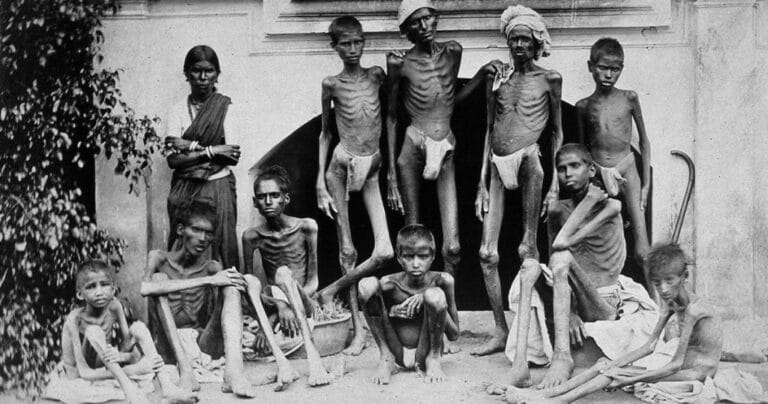
Q 1. Work in groups of four. Find out about ‘The Bengal famine of 1943’. It was a major famine in the Bengal province in India during World War II. Collect information on the following points on The Bengal famine of 1943 for the project:
(a) Affected area(s)
(b) Reasons of famine
(c) Relief measures
(d) Pictures, films, etc.
Prepare a poster using pictures and highlighting the information you have collected. Give a title of your choice to the poster and display it in the class.
Ans 1: Poster Title: “The Forgotten Tragedy: Bengal Famine of 1943”
a). Affected Area(s)
- Primary Region: Bengal Province (now split between West Bengal, India, and Bangladesh).
- Urban Impact: Calcutta (Kolkata) saw mass migration of starving rural populations.
- Rural Devastation: Districts like Midnapore were hit hardest due to cyclones and crop failure.
b). Reasons for the Famine
- Wartime Policies:
- British “denial policies” confiscated boats and rice to deter Japanese invasion, disrupting local trade.
- Rice imports from Burma stopped after Japanese occupation.
- Natural Disasters:
- October 1942 cyclone destroyed crops and infrastructure.
- Crop disease (brown spot) further reduced yields.
- Colonial Neglect:
- Churchill’s government diverted food supplies to Europe, downplaying the crisis.
Visual Suggestion:
- Political cartoon of Churchill ignoring Bengal.
- Graph showing rice price spikes (1942–43).
C). Relief Measures
- Government Actions:
- Delayed response; official relief began only in late 1943.
- 110 million free meals distributed, but inadequate.
- NGO Efforts:
- Quakers (FAU/AFSC): Set up hospitals and refugee camps.
- Local charities like The Statesmanpublished photos to spur global aid.
- Military Intervention:
- British Indian Army took over relief in October 1943, improving distribution.
D). Pictures, Films, and Media
- Photographs:
- Iconic images of emaciated victims published by The Statesman(August 1943).
- Films:
- Akaler Sandhane(1980, Satyajit Ray): Depicts a film crew documenting the famine.
- Ashani Sanket(1973, Satyajit Ray): Focuses on a village during the famine.
- Survivor Testimonies:
- Oral histories collected by Sailen Sarkar (e.g., Bijoy krishna Tripathi,).
Poster Design Tips
- Layout: Use a split format—left side for causes, right for effects.
- Colors: Red/black for urgency; sepia tones for historical photos.
- Quotes: Add a survivor’s voice (e.g., “Hunger stalked us”).
- Call to Action: End with “Never Forget” and a statistic (e.g., 3 million dead)
DO YOU KNOW
One of the three islands in the Juan Fernandez archipelago, 700 km off the Pacific coast of Chile was discovered in the 16th century. Alexander Selkirk, the Scottish sailor was marooned there for four years and four months. He related his experience to Daniel Defoe, who wrote his famous adventure book Robinson Crusoe based on the sailor’s experience, since then the island is known as Robinson Crusoe. |
There is a seemingly unbelievable true story of the orphaned bear cub, which was found by Polish troops during World War II who travelled with them through Iraq, Syria, Palestine, Egypt, Italy and Scotland. During the war, Wojciech Narebski and his fellow Polish servicemen had to lift crates of heavy metal artillery. Fortunately for them, one of the soldiers had superhuman strength: Corporal Wojtek, a Syrian brown bear. When the bear saw that soldiers were struggling, he’d want to help… he’d come over, grab a crate and carry it to the truck. This can be heavy work, even for a bear. When Wojtek (bear) got tired, he would simply stack one crate on top of the other which also helped the soldiers because they didn’t have to lift the crate off the ground. Of course, Corporal Wojtek (bear) got a reward of honey and marmalade. That was his favourite! |
You know, things can happen that you wouldn’t normally think are true. Collect some more stories under the title— ‘Sometimes truth is stranger than fiction. |
Ans 1: The title “Sometimes Truth is Stranger Than Fiction” is perfect for collecting fascinating real-life stories that sound like they’re straight out of a novel or movie. Here’s a list of a few more mind-blowing true stories you can include under this theme:
- The Man Who Survived Two Atomic Bombs
Name: Tsutomu Yamaguchi
Story: He was in Hiroshima on August 6, 1945, when the first atomic bomb was dropped. He survived and returned home… to Nagasaki. Just three days later, he survived the second atomic bombing too. He lived until the age of 93!
- The Great Emu War – Australia Lost a War to Birds
Year: 1932
Story: Australia sent soldiers with machine guns to control an overpopulation of emus destroying crops. But the emus outran and outsmarted them. The military withdrew, having lost the war… to birds!
- Juliane Koepcke – The Girl Who Fell from the Sky
Year: 1971
Story: A 17-year-old girl survived a plane crash over the Amazon rainforest, falling from 10,000 feet strapped to her seat. She wandered alone for 11 days in the jungle with a broken collarbone and infected wounds before being rescued.
- The Real-Life Tarzan
Name: Ho Van Lang
Story: After the Vietnam War, a father and his young son fled into the jungle to escape bombing. They lived in complete isolation for over 40 years, surviving off the forest. The son, Lang, knew nothing about the modern world when he was found in 2013.
- The Ship That Came Back Without Its Crew – The Mary Celeste
Year: 1872
Story: The American merchant ship Mary Celeste was found in the Atlantic Ocean completely abandoned. The lifeboat was gone, but there was no sign of a struggle, and everything else was untouched. The mystery of the vanished crew remains unsolved.
- The Dancing Plague of 1518
Location: Strasbourg, France
Story: Dozens of people began dancing uncontrollably in the streets for days—some even danced to their deaths. No one knows for sure why it happened: was it mass hysteria, food poisoning, or something else?
Unit 4: From the Diary of Anne Frank
(Grammar, comprehension & solutions) Updated Solution 2024-2025
This complete solution is prepared as per the latest syllabus of 2024-25. If you have any further queries, feel free to ask! 😊