
Chapter 3 - Two Stories About Flying (Ncert Solutions) for Class 10 English
Ultimate NCERT Solutions for Chapter 3 – Two Stories About Flying
Updated Solution 2024-2025 Updated Solution 2024-2025
NCERT Solutions for Class 10 English, Chapter 3 – Two Stories About Flying
(Question/Answers, summary)
Chapter 3 Two Stories About Flying
I – His First Flight
Summary of Chapter 3: “Two Stories About Flying”
Part I: “His First Flight” (Eng)
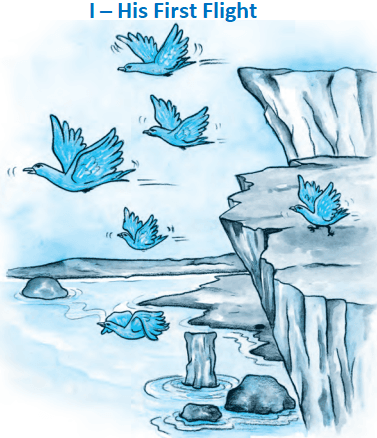
“His First Flight” by Liam O’Flaherty is an inspiring story about a young seagull who is afraid to fly. Despite his siblings successfully taking flight, he hesitates due to his fear of falling. His parents try to encourage him, but he remains hesitant, standing alone on a ledge, too scared to take the leap.
Hunger eventually forces him to act. Seeing his mother holding a piece of fish just out of reach, he instinctively dives toward it. To his surprise, his wings spread naturally, and he begins to fly. Overcoming his fear, he soars confidently above the sea, experiencing the joy of flying for the first time.
The story highlights the importance of self-confidence, courage, and overcoming fears. It teaches that taking the first step is often the hardest but leads to great achievements.
Summary of Chapter 3: “Two Stories About Flying”
Part I: “His First Flight” (In Hindi)
“उसकी पहली उड़ान” लियाम ओ’फ्लाहर्टी द्वारा लिखी गई एक प्रेरणादायक कहानी है, जो एक युवा सीगल (समुद्री पक्षी) के बारे में है जो उड़ने से डरता है। उसके भाई-बहन उड़ना सीख जाते हैं, लेकिन वह डर के कारण उड़ने का साहस नहीं जुटा पाता। उसके माता-पिता उसे उड़ने के लिए प्रेरित करते हैं, लेकिन वह चट्टान के किनारे खड़ा रहता है और डर की वजह से छलांग नहीं लगाता।
अंततः भूख उसे उड़ने के लिए मजबूर कर देती है। जब वह अपनी माँ को मछली का एक टुकड़ा लेकर आते देखता है, तो वह उसे पाने के लिए आगे बढ़ता है और अनजाने में उड़ान भर लेता है। जैसे ही वह हवा में आता है, उसके पंख स्वाभाविक रूप से फैल जाते हैं, और वह उड़ने लगता है। डर पर विजय पाने के बाद, वह आत्मविश्वास से आसमान में ऊँचाई तक उड़ने लगता है और उड़ान का आनंद लेता है।
यह कहानी आत्मविश्वास, साहस और डर पर काबू पाने का संदेश देती है। यह हमें सिखाती है कि पहला कदम उठाना सबसे कठिन होता है, लेकिन एक बार जब हम इसे पार कर लेते हैं, तो बड़ी सफलताएँ हासिल कर सकते हैं।
Thinking about the Text
Q 1: Why was the young seagull afraid to fly? Do you think all young birds are afraid to make their first flight, or are some birds timid than others? Do you think a human baby also finds it a challenge to take its first steps?
Ans 1: The young seagull was scared to fly because it was his first attempt, and he feared he might fall and get hurt. He doubted whether his wings were strong enough to support him in the air.
It is natural to feel afraid when trying something for the first time. Most young birds likely experience fear before their first flight, though some may be more nervous than others. Similarly, human babies also face challenges when taking their first steps. They hesitate, stumble, and often need support before they gain confidence in walking independently.
Q 2: “The sight of the food maddened him.” What does this suggest? What compelled the young seagull to fly finally?
Ans 2: The young seagull was afraid to take his first flight. Despite his family’s repeated encouragement and scolding, he lacked the courage to leap off the ledge. As a result, they left him alone there until he was ready. For over twenty-four hours, he remained hungry, which ultimately became the driving force behind his flight.
His desperation grew when he saw his mother tearing apart a fish right in front of him. Crying out in hunger, he begged her for food. When his mother finally approached with a piece of fish in her beak, he was overjoyed. However, just as he expected her to feed him, she stopped at a distance. Driven by hunger, he instinctively lunged forward to grab the food. In doing so, he lost his balance and tumbled off the ledge.
At first, he was terrified as he plunged downward. But soon, he felt his wings naturally spreading, and to his surprise, he was flying! At that moment, he realized that he, too, had the ability to soar like his family. In the end, his hunger overpowered his fear, and he took his first flight with excitement and joy.
Q 3: “They were beckoning to him, calling shrilly.” Why did the seagull’s father and mother threaten him and cajole him to fly?
Ans 3: The young seagull’s parents kept calling out to him, encouraging him to take his first flight. However, he was too afraid of falling from the cliff and hesitated to try. While his brothers and sister confidently flew away, he remained on the ledge, unwilling to make the attempt. To push him out of his fear, his family left him alone, urging and even threatening him to fly. Despite their efforts, he still refused to take the leap.
Q 4: Have you ever had a similar experience, where your parents encouraged you to do something that you were too scared to try? Discuss this in pairs or groups.
Ans 4: Yes, I had a similar experience when I was learning to swim. At first, I was very scared of the water and hesitated to even step into the pool. No matter how much my parents encouraged me, I was too afraid of sinking. However, they continued to motivate me, assuring me that I would be safe. My father stayed by my side in the pool, helping me float and guiding me step by step. Slowly, with regular practice and their support, I gained confidence. Eventually, I overcame my fear and started swimming on my own. Now, I love swimming and enjoy it every chance I get!
Q 5: In the case of a bird flying, it seems a natural act, and a foregone conclusion that it should succeed. In the examples you have given in answer to the previous question, was your success guaranteed, or was it important for you to try, regardless of a possibility of failure?
Ans 5: Learning something new often comes with initial challenges, and the fear of failure can sometimes hold us back. Just as the young seagull’s parents encouraged him to fly, I too had to overcome my fears when learning to ride a bicycle. My father motivated me to keep trying until I gained confidence.
Success isn’t always guaranteed, but determination and persistence significantly increase the chances of achieving our goals. As the saying goes, “Practice makes perfect,” and with consistent effort, success becomes more attainable.
Chapter 3 Two Stories About Flying
Updated Solution 2024-2025
Speaking
Q 1: We have just read about the first flight of a young seagull. Your teacher will now divide the class into groups. Each group will work on one of the following topics. Prepare a presentation with your group members and then present it to the entire class.
- Progression of Models of Airplanes
- Progression of Models of Motorcars
- Birds and Their Wing Span
- Migratory Birds — Tracing Their Flights
Ans 1: (Activity to be done by yourself. By using this pattern)
Here’s a structured approach for your group presentation, depending on your assigned topic:
- Progression of Models of Airplanes
- Introduction: Briefly explain how humans were inspired by birds to achieve flight.
- Early Attempts: Leonardo da Vinci’s sketches, the Wright brothers’ first successful flight (1903).
- Advancements: Development of jet engines, commercial airplanes (Boeing, Airbus), military aircraft.
- Modern Era: Supersonic jets (Concorde), stealth aircraft, and future concepts (electric planes, AI-controlled planes).
- Conclusion: The impact of airplanes on global travel and trade.
- Progression of Models of Motorcars
- Introduction: Importance of automobiles in daily life.
- Early Vehicles: Steam-powered cars (18th century), Karl Benz’s first gasoline-powered car (1886).
- Mass Production: Henry Ford’s Model T (1908) and its impact on affordability.
- Modern Developments: Electric cars (Tesla), hybrid models, self-driving technology.
- Future of Automobiles: AI-driven vehicles, flying cars, sustainability in car manufacturing.
- Birds and Their Wing Span
- Introduction: Importance of wing span in flight.
- Small Birds: Hummingbirds (smallest wingspan, ~4 inches).
- Medium-Sized Birds: Pigeons, crows, and seagulls (~2-4 feet).
- Large Birds: Eagles, albatrosses, and condors (Wandering Albatross has the largest wingspan, ~12 feet).
- Comparison with Airplane Wings: How bird wings inspired airplane wing designs.
- Conclusion: The role of wing span in migration, flight efficiency, and survival.
- Migratory Birds — Tracing Their Flights
- Introduction: Why do birds migrate? (Weather, food, breeding).
- Famous Migratory Birds: Arctic Tern (longest migration, pole to pole), Swallows, Flamingos, Cranes.
- Tracking Techniques: Satellite tracking, bird banding, GPS tagging.
- Challenges: Climate change, habitat destruction, human interference.
- Conservation Efforts: Bird sanctuaries, migration corridors, international treaties.
- Conclusion: Importance of protecting migratory birds for biodiversity.
Each group can include images, videos, and charts to make the presentation engaging. Would you like help creating a PowerPoint or visuals?
Writing
Q 1: Write a short composition on your initial attempts at learning a skill. You could describe the challenges of learning to ride a bicycle or learning to swim. Make it as humorous as possible.
Ans 1: My Hilarious Attempt at Learning to Ride a Bicycle:
When I first decided to learn how to ride a bicycle, I was convinced it would be a piece of cake. After all, I had seen little kids zooming around effortlessly. How hard could it be? Spoiler alert: very hard!
My first challenge was balance. No matter how hard I tried, the moment I lifted my feet off the ground, my bike wobbled like a jelly on a rollercoaster. My first ride ended in a very close encounter with a bush—one that I’m sure is still holding a grudge.
Then came steering. I had assumed that turning the handlebars slightly would lead to a graceful turn. Instead, my bike had a mind of its own and took me straight into a parked car. (No damage to the car, but my ego? Completely shattered.)
The worst part? My family was watching. Every failed attempt was met with laughter, encouragement, and—most importantly—a phone camera recording every embarrassing moment. I suspect they were secretly hoping for a viral video.
After many falls, a few bruises, and a lot of determination, I finally managed to ride in a straight line without crashing. The sense of achievement was incredible! But just when I thought I had mastered it, my dad called out, “Now try turning!”
Let’s just say…I found another bush to crash into.
Chapter 3 Two Stories About Flying: II. The Black Aeroplane
II- The Black Aeroplane
Summary of Chapter 3 – II. The Black Aeroplane (Eng)
This chapter is a mysterious and thrilling story written by Frederick Forsyth. It revolves around a pilot who encounters an unusual experience while flying at night.
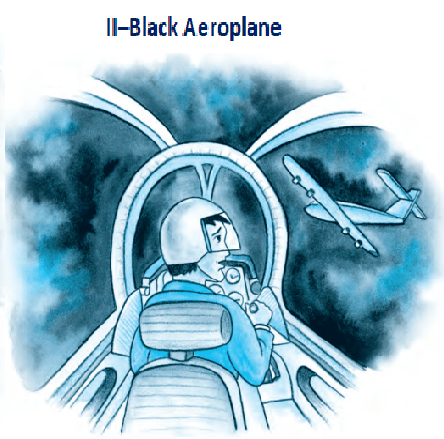
The narrator, a pilot, was flying his Dakota airplane from France to England on a night journey. The sky was clear, and he was excited to reach home and have a good breakfast with his family. However, as he was flying over the English Channel, he suddenly saw huge black storm clouds ahead. Instead of turning back, he decided to fly through the storm, which turned out to be a big mistake.
Inside the storm, everything went dark, his compass and radio stopped working, and he lost all contact with the control tower. He was completely lost and had no idea which direction to go. Just then, out of nowhere, he saw a black aeroplane flying next to him. The mysterious pilot in the black aeroplane signaled him to follow. The narrator obeyed and followed the black aeroplane through the storm. Soon, he saw the runway lights of an airport and landed safely.
After landing, he asked the control tower about the black aeroplane that had guided him. To his shock, the authorities told him that no other plane was in the sky that night. He was left wondering—who was the mysterious pilot that helped him?
Themes of the Story:
- Mystery & Supernatural Elements – The black aeroplane and its pilot remain unexplained, adding an eerie touch.
- Hope & Faith – Even in a life-threatening situation, the pilot trusted the mysterious guidance.
- Bravery & Decision-Making – The narrator’s risky decision to fly through the storm shows courage.
This story leaves the reader with a sense of wonder—was the black aeroplane a miracle, a ghost, or just the pilot’s imagination?
Summary of Chapter 3 – II. The Black Aeroplane (In Hindi)
यह कहानी फ्रेडरिक फॉर्सिथ द्वारा लिखी गई एक रहस्यमयी और रोमांचक घटना को दर्शाती है। इसमें एक पायलट के अनुभव का वर्णन किया गया है, जिसे उड़ान के दौरान एक अजीबोगरीब घटना का सामना करना पड़ता है।
कहानी का वक्ता (नरेटर) एक डकोटा हवाई जहाज उड़ा रहा था। वह फ्रांस से इंग्लैंड जा रहा था और बहुत उत्साहित था क्योंकि वह जल्द ही अपने घर पहुँचकर स्वादिष्ट नाश्ता करने वाला था। आसमान साफ़ था, और सबकुछ सामान्य लग रहा था। लेकिन जैसे ही वह इंग्लिश चैनल के ऊपर पहुँचा, उसने अचानक काले तूफानी बादल देखे।
वह मुड़कर वापस जा सकता था, लेकिन उसने खतरनाक तूफान के बीच से जाने का फैसला किया। जैसे ही उसने जहाज को बादलों के बीच उड़ाया, चारों तरफ घना अंधेरा हो गया। उसकी कंपास और रेडियो ने काम करना बंद कर दिया, और उसका नियंत्रण टॉवर से संपर्क टूट गया। वह रास्ता भटक गया और पूरी तरह से असहाय महसूस करने लगा।
तभी, अचानक उसे एक काला हवाई जहाज दिखाई दिया, जो उसके विमान के बगल में उड़ रहा था। उस रहस्यमयी पायलट ने उसे इशारा किया कि वह उसका पीछा करे। नरेटर ने बिना सोचे-समझे उसका अनुसरण किया। कुछ समय बाद, उसने हवाई पट्टी (रनवे) की रोशनी देखी और सुरक्षित लैंडिंग कर ली।
जब वह हवाई अड्डे पर पहुँचा, तो उसने अधिकारियों से उस काले हवाई जहाज के बारे में पूछा। लेकिन उसे यह जानकर झटका लगा कि उस रात आकाश में उसके अलावा कोई और हवाई जहाज था ही नहीं! अब सवाल यह था—वह रहस्यमयी पायलट कौन था, जिसने उसे बचाया?
कहानी के मुख्य विचार:
- रहस्य और चमत्कार – काले हवाई जहाज और उसके पायलट की सच्चाई अज्ञात रहती है।
- आशा और विश्वास – कठिन परिस्थिति में भी नरेटर ने रहस्यमयी पायलट पर भरोसा किया।
- साहस और निर्णय-शक्ति – तूफान में घिरने के बावजूद, पायलट ने बहादुरी से स्थिति का सामना किया।
यह कहानी रोमांच, रहस्य और चमत्कार से भरी हुई है और पाठकों को सोचने पर मजबूर कर देती है—क्या वह काला हवाई जहाज एक वास्तविक घटना थी, एक चमत्कार था, या सिर्फ पायलट का भ्रम?
Thinking about the Text
Q 1: “I’ll take the risk.” What is the risk? Why does the narrator take it?
Ans 1: The pilot of the Dakota DS-088 was eager to reach his home in England to spend time with his family. However, while flying, he encountered a massive storm with dark clouds blocking his path. Despite the danger, he chose to fly straight into the storm instead of turning back or changing course. His strong desire to reunite with his family and enjoy a traditional English breakfast motivated him to take the risk, even though visibility was almost zero.
Q 2: Describe the narrator’s experience as he flew the aeroplane into the storm.
Ans 2: As the pilot entered the storm, his plane was thrown around violently, making the flight extremely turbulent. Thick black clouds surrounded him, making it impossible to see anything outside. To make matters worse, his compass and other flight instruments stopped working due to the harsh weather conditions. Fear gripped him as he realized that his fuel was running low, and he had only about ten minutes of flight time left. Suddenly, he saw a mysterious black aeroplane flying beside him, with a pilot signaling him to follow. With no other option, he obeyed and followed the unknown plane, which guided him safely out of the storm and onto the runway
Q 3: Why does the narrator say, “I landed and was not sorry to walk away from the old Dakota…”?
Ans 3: After battling through the storm and landing safely, the pilot felt an immense sense of relief. He had been through a terrifying experience and was grateful to be on solid ground. However, what puzzled him most was the mysterious black aeroplane and its pilot, who had guided him through the storm. He wanted to thank his unknown savior but was disappointed that he could not. Despite his curiosity, he was simply relieved to have survived and was not hesitant to leave his old Dakota behind.
Q 4: What made the woman in the control center look at the narrator strangely?
Ans 4: When the pilot mentioned the black aeroplane that had helped him, the woman at the control center was visibly surprised. She told him that, according to the radar, there had been no other aircraft in the sky during the storm—only his plane. Her reaction made the narrator question his own experience, leaving him puzzled about who or what had actually guided him to safety.
Q 5: Who do you think helped the narrator to reach safely? Discuss this among yourselves and give reasons for your answer.
Ans 5: There is no clear explanation for the mysterious black aeroplane. One possibility is that the narrator, in a moment of extreme fear and stress, imagined the presence of another pilot guiding him. With no other plane visible on the radar, it is likely that he relied on his instincts and experience to navigate through the storm. His determination, skill, and courage might have been the real factors that helped him land safely, even though he perceived it as external help.
Thinking about Language
Q I: Study the sentences given below.
(a) They looked like black mountains.
(b) Inside the clouds, everything was suddenly black.
(c) In the black clouds near me, I saw another aeroplane.
(d) The strange black aeroplane was there.
The word ‘black’ in sentences (a) and (c) refers to the very darkest colour. But in (b) and (d) (here) it means without light/with no light.
‘Black’ has a variety of meanings in different contexts. For example:
(a) ‘I prefer black tea’ means ‘I prefer tea without milk’.
(b) ‘With increasing pollution, the future of the world is black’ means
‘With increasing pollution, the future of the world is very depressing/ without hope’.
Now, try to guess the meanings of the word ‘black’ in the sentences given below. Check the meanings in the dictionary and find out whether you have guessed right.
- Go and have a bath; your hands and face are absolutely black. ____________________________
- The taxi-driver gave Ratan a black look as he crossed the road when the traffic light was green. ____________________________
- The bombardment of Hiroshima is one of the blackest crimes against humanity. _______________
- Very few people enjoy Harold Pinter’s black comedy. __________________________________
- Sometimes shopkeepers store essential goods to create false scarcity and then sell these in black. ____________________________
- Villagers had beaten the criminal black and blue. ____________________________________
Ans I:
- Go and have a bath; your hands and face are absolutely black. – The ‘black’ in this sentence denotes that the face and hands are dark due to dust and dirt.
- The taxi-driver gave Ratan a black look as he crossed the road when the traffic light was green. – The ‘black’ in this sentence refers to an angry or annoyed look.
- The bombardment of Hiroshima is one of the blackest crimes against humanity. – The ‘black’ in this sentence denotes a dark and brutal incident against humanity.
- Very few people enjoy Harold Pinter’s black comedy. – The ‘black’ in this sentence denotes dark or distressing comedy.
- Sometimes shopkeepers store essential goods to create false scarcity and then sell these in black. – The ‘black’ in this sentence refers to the hoarding of goods by shopkeepers to sell those goods at a higher price later.
- Villagers had beaten the criminal black and blue. – The ‘black’ in this sentence denotes that the criminal was beaten and badly bruised by the villagers.
Q II: Look at these sentences taken from the lesson you have just read:
(a) I was flying my old Dakota aeroplane.
(b) The young seagull had been afraid to fly with them.
In the first sentence the author was controlling an aircraft in the air. Another example is: Children are flying kites. In the second sentence the seagull was afraid to move through the air, using its wings.
Match the phrases given under Column A with their meanings given under Column B:
A | B |
1. Fly a flag | – Move quickly/suddenly |
2. Fly into rage | – Be successful |
3. Fly along | – Display a flag on a long pole |
4. Fly high | – Escape from a place |
5. Fly the coop | – Become suddenly very angry |
Ans II:
A | B |
1. Fly a flag | – Display a flag on a long pole |
2. Fly into rage | – Become suddenly very angry |
3. Fly along | – Move quickly/suddenly |
4. Fly high | – Be successful |
5. Fly the coop | – Escape from a place |
Q III: We know that the word ‘fly’ (of birds/insects) means to move through air using wings. Tick the words which have the same or nearly the same meaning.
swoop | flit | paddle | flutter |
ascend | float | ride | skim |
sink | dart | hover | glide |
descend | soar | shoot | spring |
stay | fall | sail | flap |
Ans III: The words that have the same or nearly the same meaning as ‘fly’ are:
✔swoop
✔flit
✔flutter
✔ascend
✔skim
✔dart
✔hover
✔glide
✔soar
✔sail
✔ flap
Writing
Q: Have you ever been alone or away from home during a thunderstorm? Narrate your experience in a paragraph.
Ans: Yes, I once experienced a thunderstorm while I was alone at my grandmother’s house. It started as a normal evening, but soon, dark clouds covered the sky, and the wind howled like a hungry wolf. Suddenly, BOOM! A loud thunderclap shook the windows, and the power went out. I sat frozen on the couch, clutching my phone like it was my only lifeline. Every flash of lightning lit up the room like a horror movie scene, and the shadows seemed to dance on the walls.
I tried to act brave, but when a particularly loud thunderclap made the entire house tremble, I screamed and hid under a blanket—because obviously, blankets are the ultimate shield against thunderstorms! After what felt like an eternity, the storm finally passed, and I realized I had survived my most terrifying solo adventure!
Chapter 3 Poem – How to Tell Wild Animals
Summary of the Poem – “How to Tell Wild Animals” (Eng)
The poem “How to Tell Wild Animals”, written by Carolyn Wells, is a humorous and playful take on identifying wild animals based on their behavior and characteristics.
The poet describes different wild animals in a fun and exaggerated manner. She suggests that if a roaring beast kills you instantly, it is the Asian Lion. If a beast with black stripes on a yellow body jumps on you and eats you up, then it is the Bengal Tiger. Similarly, if you are meeting a creature that hugs you tightly, don’t be happy—it is actually a Bear!
Further, the poet humorously explains that if you notice a ‘noble wild beast’ and it cries in pain before attacking, it is a Leopard. If you see an animal with spots that doesn’t hesitate to pounce on you, it is a Leopard as well. Next, she describes the Hyena, which is known for its laughing-like sound, and the Crocodile, which sheds ‘tears’ while eating its prey.
Finally, the poet talks about the Chameleon, a small lizard-like creature that changes its color to blend with its surroundings. She jokes that if you see nothing on a tree branch, it means a Chameleon is sitting there, camouflaged!
The poem uses humor, irony, and exaggeration to make learning about wild animals fun and entertaining.
Summary of the Poem – “How to Tell Wild Animals” (In Hindi)
“How to Tell Wild Animals” कविता की लेखिका कैरोलीन वेल्स हैं। यह कविता एक हास्यपूर्ण और मज़ेदार अंदाज़ में विभिन्न जंगली जानवरों की पहचान करने के तरीके बताती है।
कविता में कवयित्री कहती हैं कि यदि कोई गरजता हुआ जानवर आपको तुरंत मार डाले, तो समझ लें कि वह एशियाई शेर है। अगर कोई पीली चमड़ी वाला, काली धारियों वाला जीव आप पर कूदकर आपको खा जाए, तो वह बंगाल टाइगर होगा। इसी तरह, यदि कोई जानवर आपको ज़ोर से गले लगाए, तो यह कोई प्यार नहीं बल्कि भालू है, जो आपको अपनी बाहों में कसकर मार सकता है!
इसके बाद, कवयित्री बताती हैं कि अगर कोई जानवर आपको देखते ही छलांग लगाकर हमला करे और दर्द से कराहने की आवाज़ निकाले, तो वह तेंदुआ है। यदि कोई धब्बेदार जानवर आपको देखते ही बिना रुके झपट्टा मार दे, तो वह भी तेंदुआ ही होगा। फिर वह लकड़बग्घे (हाइना) का ज़िक्र करती हैं, जो हंसने जैसी आवाज़ निकालता है, और मगरमच्छ, जो शिकार को खाते हुए ‘आंसू’ बहाता है।
अंत में, कवयित्री गिरगिट (Chameleon) के बारे में बताती हैं, जो अपने चारों ओर के वातावरण के अनुसार रंग बदल सकता है। वह मज़ाक में कहती हैं कि यदि आपको किसी पेड़ की टहनी पर कुछ दिखाई ही नहीं दे रहा, तो हो सकता है कि वहाँ गिरगिट बैठा हो!
इस कविता में हास्य, व्यंग्य और अतिशयोक्ति का उपयोग करके जंगली जानवरों के बारे में मज़ेदार ढंग से जानकारी दी गई है, जिससे यह कविता मनोरंजक और रोचक बन जाती है।
Thinking about the Poem
Q 1: Does ‘dyin’ really rhyme with ‘lion’? Can you say it in such a way that it does?
Ans 1: No, ‘dyin’ does not naturally rhyme with ‘lion.’ However, if we pronounce ‘lion’ as ‘lying,’ it might sound similar to ‘dyin’, creating a possible rhyme.
Q 2: How does the poet suggest that you identify the lion and the tiger? When can you do so, according to him?
Ans 2: The poet explains that if you see a large, tawny-colored beast roaming in the jungles of the East and hear it roaring, it is an Asian Lion. In contrast, if you spot a noble wild beast with black stripes on a yellow coat moving freely, it is a Bengal Tiger. The poet also highlights that while a lion roars loudly when attacking, a tiger hunts silently.
Q 3: Do you think the words ‘lept’ and ‘lep’ in the third stanza are spelt correctly? Why does the poet spell them like this?
Ans 3: No, the words ‘lept’ and ‘lep’ are not spelled correctly. The correct spellings are ‘leapt’ and ‘leap.’ The poet intentionally used these incorrect spellings to maintain the poem’s rhythm and add humor, emphasizing the word ‘leopard’ in each line.
Q 4: Do you know what a ‘bearhug’ is? It’s a friendly and strong hug — such as bears are thought to give, as they attack you! Again, hyenas are thought to laugh, and crocodiles to weep (‘crocodile tears’) as they swallow their victims. Are there similar expressions and popular ideas about wild animals in your own language(s)?
Ans 4: A ‘bearhug’ refers to a tight and strong embrace, similar to how a bear might grip its prey. Other animals also have symbolic expressions, such as hyenas being associated with laughter (even though they don’t actually laugh) and crocodiles shedding ‘crocodile tears’ while devouring their victims. Many languages have similar expressions related to animals.
Q 5: Look at the line “A novice might nonplus”. How would you write this ‘correctly’? Why is the poet’s ‘incorrect’ line better in the poem?
Ans 5: The grammatically correct version would be “A novice might be nonplussed.” However, the poet uses the phrase “A novice might nonplus” to maintain the rhyme and rhythm of the poem, making it more engaging and humorous. The incorrect wording helps it rhyme with ‘thus.’
Q 6: Can you find other examples of poets taking liberties with language, either in English or in your own language(s)? Can you find examples of humorous poems in your own language(s)?
Ans 6: Yes, poets often take creative liberties with language, a technique known as ‘poetic license,’ to enhance rhythm, rhyme, or humor. For instance, in The Tale of Custard the Dragon by Ogden Nash, the words ‘realio’ and ‘trulio’ replace ‘really’ and ‘truly’ for a playful effect. Here’s an example:
“Belinda lived in a little white house,
With a little black kitten and a little grey mouse,
And a little yellow dog and a little red wagon,
And a realio, trulio, little pet dragon.”
Q 7: Much of the humour in the poem arises from the way language is used, although the ideas are funny as well. If there are particular lines in the poem that you especially like, share these with the class, speaking briefly about what it is about the ideas or the language that you like or find funny.
Ans 7: The humor in the poem comes from the way words are used unexpectedly. One amusing line is:
“A noble wild beast greets you.”
At first, it sounds as if the animal is welcoming you, but in reality, it is a dangerous predator—making the phrase ironic and funny. Another humorous line is:
“He’ll only lep and lep again.”
Here, the word ‘lep’ is used to maintain the rhyme with ‘leopard,’ making the line playful and engaging.
Chapter 3 – Poem the Ball Poem
Summary of Chapter 3 – Poem “The Ball Poem” (Eng)
— Poet: John Berryman
Summary: “The Ball Poem” is a touching poem about loss and growing up. The poem revolves around a young boy who loses his ball while playing. As he watches it bounce away and disappear, he feels a deep sense of grief and realizes that it is gone forever.
Instead of offering him a new ball, the poet suggests that this loss is an important life lesson. The ball symbolizes childhood, innocence, and the things we love but eventually lose. Through this experience, the boy begins to understand the harsh realities of life—that loss is inevitable and irreversible.
The poem conveys the idea that everyone must learn to cope with loss and move forward. It teaches that material things can be replaced, but certain emotional attachments and experiences shape our understanding of life. The poet uses simple language to express a deep and universal truth: learning to deal with loss is a part of growing up.
Theme:
Loss and its emotional impact
The process of growing up
Acceptance of reality
Learning to move on in life
Summary of Chapter 3 – Poem “The Ball Poem” (In Hindi)
सारांश: “The Ball Poem” एक मार्मिक कविता है, जो जीवन में हानि (loss) और परिपक्वता (maturity) के विषय को दर्शाती है। इस कविता में एक छोटे लड़के का जिक्र है, जो खेलते समय अपनी गेंद खो देता है। जैसे ही गेंद पानी में गिरकर दूर चली जाती है, वह उसे असहाय होकर देखता है और गहरे दुःख का अनुभव करता है।
कवि लड़के को नई गेंद लाने की सलाह नहीं देता, बल्कि कहता है कि यह एक ज़रूरी सबक है, जिसे हर किसी को सीखना पड़ता है। वह गेंद सिर्फ एक साधारण वस्तु नहीं है, बल्कि बचपन, मासूमियत और प्रिय चीजों का प्रतीक है, जिन्हें हम जीवन में खोते चले जाते हैं। इस अनुभव से लड़का यह समझने लगता है कि कुछ चीजें वापस नहीं आ सकतीं और हमें उन्हें स्वीकार करके आगे बढ़ना पड़ता है।
यह कविता हमें सिखाती है कि हानि जीवन का एक अनिवार्य हिस्सा है और इससे बचा नहीं जा सकता। हमें अपनी भावनाओं को समझना और उन्हें स्वीकार करना सीखना चाहिए।
मुख्य भाव:
हानि और उसके भावनात्मक प्रभाव
परिपक्वता और जीवन के कठोर सत्य को स्वीकार करना
आगे बढ़ने की सीख
बचपन और मासूमियत का खोना
Thinking about the Poem
In pairs, attempt the following questions.
Q 1: Why does the poet say, “I would not intrude on him”? Why doesn’t he offer him money to buy another ball?
Ans 1: The poet says, “I would not intrude on him” because he wants the boy to understand the reality of loss on his own. He believes that experiencing loss is an important part of growing up. By not interfering, the poet allows the boy to learn a valuable life lesson. He also refrains from giving the boy money to replace the ball because doing so would take away the significance of the lesson. The experience teaches the child responsibility and helps him understand that some things, once lost, cannot be replaced.
Q 2: “… staring down/All his young days into the harbor where/His ball went …” Do you think the boy has had the ball for a long time? Is it linked to the memories of days when he played with it?
Ans 2: Yes, it seems that the boy had the ball for a long time. When it falls into the water, he is overwhelmed with memories of the times he spent playing with it. The ball represents moments of joy and innocence from his childhood, which he now realizes are gone forever. Though he can buy a new ball, the memories attached to the lost one are irreplaceable.
Q 3: What does “in the world of possessions” mean?
Ans 3: The phrase “in the world of possessions” refers to a materialistic world where people own different things like land, money, or valuable objects. In the poem, the loss of the ball may seem minor, but for the boy, it symbolizes something much deeper—the emotional attachment and memories associated with it. Through this loss, he understands that life is not just about acquiring things but also about coping with losing them.
Q 4: Do you think the boy lost anything earlier? Pick out the words that suggest the answer.
Ans 4: No, it appears that the boy has never experienced such a loss before. The line “He senses first responsibility in a world of possessions” suggests that this is the first time he is realizing the meaning of loss. This experience makes him aware that losing something valuable can also mean losing the memories and emotions connected to it.
Q 5: What does the poet say the boy is learning from the loss of the ball? Try to explain this in your own words.
Ans 5: Through this incident, the poet highlights an important life lesson—the inevitability of loss. The boy experiences sorrow, but this moment also helps him grow and understand the nature of life. He learns that many things in life, once lost, can never be retrieved. More importantly, he realizes the need to accept loss and move forward with resilience. This moment marks his first step toward maturity and understanding responsibility.
Q 6: Have you ever lost something you liked very much? Write a paragraph describing how you felt then, and saying whether — and how — you got over your loss.
Ans 6: Yes, I once lost a wristwatch that was very special to me. It was a gift from my grandfather on my birthday, and I wore it every day. One day, while playing in the park, I realized it was missing from my wrist. I searched everywhere, retracing my steps, but it was nowhere to be found. I felt heartbroken and guilty for being careless. For days, I kept thinking about it and hoping someone would return it. Eventually, I accepted that some losses are irreversible.
My grandfather comforted me by saying that memories are more valuable than objects. Slowly, I learned to move on, though I still cherish the memory of that watch and the love behind it.
Chapter 3 Two Stories About Flying – Updated Solution 2024-2025
This complete solution is prepared as per the latest syllabus of 2024-25. If you have any further queries, feel free to ask! 😊